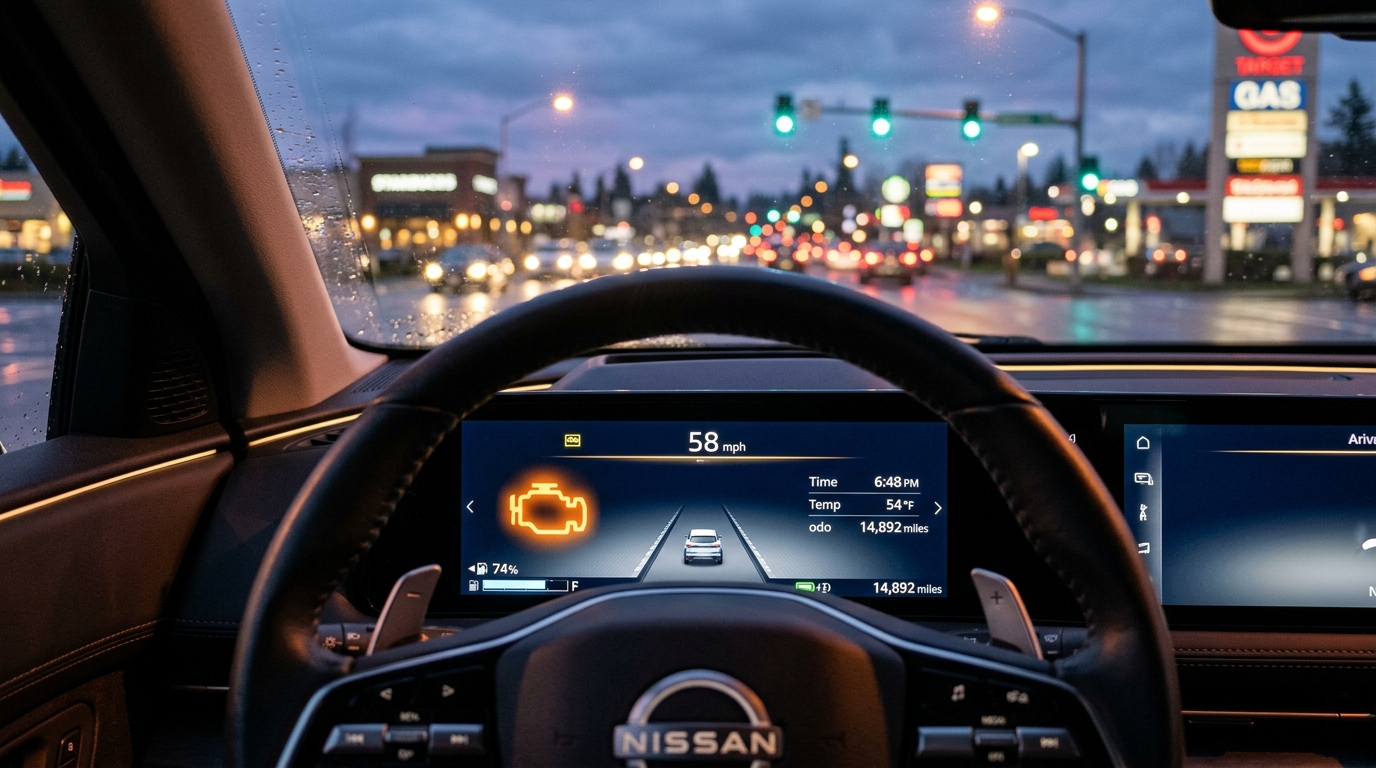
An illuminated dashboard warning can instantly disrupt a peaceful drive. The amber engine icon, officially known as the Malfunction Indicator Light, serves as the communication hub for your vehicle's onboard computer. When a sensor reports a reading that falls outside of factory parameters, the computer logs a code and turns on this warning. For drivers navigating the flat suburban streets of Niles, a sudden warning light on Touhy Avenue can raise immediate questions about vehicle safety and reliability.
The urgency of this warning depends entirely on how the light behaves on your instrument cluster. A solid check engine light indicates that the diagnostic system has detected a non-emergency issue, such as an emissions system variance or a slow-responding sensor. While you do not need to pull over immediately, you should schedule a professional diagnostic scan in the near future to prevent a minor issue from escalating.
Conversely, a flashing check engine light signals a severe, active engine misfire that requires immediate attention. When the light blinks, unburned fuel is entering the exhaust system, which can rapidly destroy your catalytic converter. If you experience a flashing warning, you should safely pull over, turn off the engine, and arrange a tow to a certified repair facility. If you need immediate assistance or directions to our facility, you can find our service center location or give our team a quick call to coordinate your next steps.
Most Common Causes of a Nissan Check Engine Light: Sensors, Seals, and EVAP Leaks
Why does this light illuminate in the first place? While the onboard computer monitors hundreds of distinct parameters, a small handful of common components trigger the vast majority of service visits. Understanding these frequent failure points can help demystify the warning and guide your repair decisions.
A loose, cracked, or improperly tightened fuel filler cap is the single most frequent cause of an illuminated check engine warning. This component seals the evaporative emissions system, which prevents fuel vapors from escaping into the atmosphere. If the seal is compromised, the computer detects a pressure loss and triggers a code like P0456, which indicates a very small EVAP system leak. Simply tightening the cap until it clicks often resolves the issue, though it may take several drive cycles for the system to run its self-tests and turn off the light.
Other common culprits involve critical engine sensors and emissions hardware:
- Oxygen sensors: These components measure the oxygen content in the exhaust gases to help the engine control module adjust the fuel-air mixture. Over time, they can become slow or contaminated, leading to reduced fuel economy.
- Mass airflow sensor: Located in the air intake tract, this sensor measures the volume of air entering the engine. If it becomes dirty, it can cause rough idling or engine hesitation.
- Catalytic converter: This expensive emissions component reduces harmful exhaust gases. It rarely fails on its own; instead, it is typically damaged by upstream issues like untreated engine misfires or oil consumption.
If you want to learn more about our certified maintenance services, you can explore our main homepage or check out our current service information to see how we help keep your vehicle running efficiently.
Table of Contents
- Decoding Common Nissan OBD-II Trouble Codes: P0101, P0304, and Misfire Triggers
- How Preventative Maintenance and Routine Care Stop Engine Management Codes
- Evaluating Nissan Warranty Coverage and Typical Diagnostic and Repair Costs
- DIY Troubleshooting with an OBD-II Scanner vs. Professional Diagnostics
- Common Questions About Nissan Diagnostic Warnings
- Schedule Your Certified Nissan Diagnostic
Decoding Common Nissan OBD-II Trouble Codes: P0101, P0304, and Misfire Triggers
What do the specific alphanumeric codes mean when a technician plugs in a diagnostic tool? Standardized Diagnostic Trouble Codes provide a starting point for our factory-trained technicians to trace the root cause of an engine management issue. Rather than pointing directly to a single broken part, these codes identify the specific system or cylinder that is operating outside of normal parameters.
For example, code P0101 is a common diagnostic code that indicates a range or performance issue with the mass airflow sensor. This code often appears when unmetered air enters the engine through a cracked intake boot, a leaking vacuum hose, or a failed intake manifold gasket, disrupting the precise fuel calculations. In other cases, a dirty or contaminated sensor element itself is the cause.
Misfire codes are another frequent family of diagnostic alerts. A code like P0304 points directly to a misfire in cylinder number 4, while P0300 indicates random or multiple cylinder misfires. An engine needs three core elements to fire correctly: air, fuel, and spark. If any of these are missing or poorly timed, a misfire occurs. Common physical causes include:
- Worn or fouled spark plugs that can no longer jump the gap under load.
- Weak or failing ignition coils that fail to deliver sufficient voltage.
- Clogged or malfunctioning fuel injectors that starve the cylinder of gasoline.
Our technicians use advanced diagnostic equipment to view live data streams, observing fuel trim percentages and misfire counts in real time. This precise approach prevents the costly "parts cannon" method of replacing innocent components. You can read our customer feedback to see how our transparent diagnostic process has helped local drivers get back on the road safely.
How Preventative Maintenance and Routine Care Stop Engine Management Codes
Can routine vehicle maintenance actively prevent the anxiety of a dashboard warning light? The answer is a resounding yes. Adhering to your vehicle's factory-recommended maintenance schedule is the single most effective way to protect your engine's control systems and avoid unexpected diagnostic codes.
Regularly replacing your spark plugs at the specified mileage intervals prevents the ignition system wear that leads to misfires. As spark plugs age, their electrodes erode, widening the gap that the electrical spark must cross. This extra resistance forces the ignition coils to work harder, accelerating their failure and eventually triggering misfire codes. Keeping up with routine engine oil changes is equally critical; clean oil ensures that variable valve timing solenoids and camshaft phasers operate smoothly, preventing timing-related fault codes.
Similarly, routine cooling system inspections help you avoid temperature-related management codes. A failing coolant temperature sensor or a stuck-open thermostat can trigger code P0128, which indicates the engine is taking too long to reach its optimal operating temperature. For drivers in Skokie commuting daily past Oakton Community College, keeping the cooling system in peak condition ensures cabin heat works perfectly during freezing winters while preventing the engine from running in a fuel-rich "warm-up" mode that wastes gasoline.
To keep your vehicle's maintenance up to date, you can easily schedule a maintenance visit online with our express service team. If you are currently weighing your vehicle options, you can also compare buying vs leasing to decide on the best path for your family's driving needs.
Evaluating Nissan Warranty Coverage and Typical Diagnostic and Repair Costs
Are diagnostic fees and check engine light repairs covered by your vehicle's factory protection? If your Nissan is relatively new, many of the components that trigger a dashboard light may be covered under the manufacturer's warranty programs. New Nissan vehicles are backed by a 3-year or 36,000-mile limited warranty (often called bumper-to-bumper coverage) and a 5-year or 60,000-mile powertrain warranty.
Additionally, federal and state regulations mandate a dedicated emissions warranty that covers major emissions-control components, such as the catalytic converter and the engine control module, for up to 8 years or 80,000 miles. If a covered component fails during these warranty periods, both the diagnostic process and the repair itself are typically completed at no cost to the owner.
For vehicles outside of warranty coverage, repair costs can vary widely depending on the root cause of the light. A simple gas cap replacement may cost under $40, while common sensor replacements, such as an oxygen sensor or mass airflow sensor, typically range from $150 to $500. Major emissions repairs, like replacing a degraded catalytic converter, are more intensive and can range from $900 to over $2,500. At our dealership, we provide transparent, upfront estimates so you always know what to expect. We are proud of our local roots, and you can see our community support initiatives to learn more about how we give back to the neighborhoods we serve.
DIY Troubleshooting with an OBD-II Scanner vs. Professional Diagnostics
Should you attempt to diagnose a dashboard warning light at home using an inexpensive code reader? While a basic OBD-II scanner is a useful tool for retrieving a five-character diagnostic trouble code, it is important to remember that a code is not a complete diagnosis. A code simply tells you which sensor or system has reported an out-of-range reading; it does not tell you why the reading is incorrect.
For instance, if your scanner retrieves an oxygen sensor code, replacing the sensor immediately might not solve the problem. The code could easily be triggered by an exhaust leak upstream, a broken wiring harness, or a vacuum leak that is altering the engine's air-fuel ratio. A professional diagnostic process at our service center involves analyzing live sensor data, performing electrical circuit tests, and using specialized equipment like a smoke test machine to pinpoint hard-to-find vacuum leaks in the intake or EVAP systems.
Attempting to resolve complex codes by replacing parts without testing can lead to unnecessary expenses and frustration. Our certified technicians have the training and model-specific databases required to interpret complex data patterns and perform targeted physical inspections. If your dashboard light has illuminated and you want to discuss your symptoms with a professional, please reach out to our service advisors to get clear, honest guidance.
Common Questions About Nissan Diagnostic Warnings
Before scheduling a diagnostic visit, many drivers have practical questions about how their vehicle's systems operate and what to expect during a service appointment. Understanding these details can help you make informed decisions about your vehicle's care and maintenance.
Q: Is it safe to drive with an active EVAP system leak?
If the check engine light is solid and the vehicle is driving normally, a minor EVAP leak (such as a loose gas cap) is generally safe for short-distance driving. However, you should not ignore the warning indefinitely, as it prevents the system from alerting you to new, more serious engine faults that may develop later.
Q: What should I do if my check engine light comes on during a road trip?
If the light is steady and the vehicle behaves normally, you can continue driving to your destination and schedule a scan soon. If the light flashes, or if you notice severe power loss or overheating, pull over safely and contact Nissan Roadside Assistance: 800-225-2233 to arrange for emergency towing to the nearest certified service center.
Q: Why does my vehicle feel normal if the check engine light is on?
Modern engine computers are highly sophisticated and can adjust fuel and timing parameters to compensate for a failing sensor, keeping the vehicle running smoothly in a "limp" or "safe" mode. Even if you do not feel a physical symptom, the underlying fault can still decrease your fuel economy and increase tailpipe emissions.
Q: Will clearing the diagnostic codes fix the underlying issue?
Clearing the codes with a scanner only turns off the dashboard light temporarily; it does not repair the physical fault. The engine computer will continuously run its self-tests and will illuminate the light again as soon as it detects the same failing parameter, often within a few miles of driving.
Q: Are aftermarket replacement sensors as reliable as original equipment?
Our service center always recommends using genuine Nissan parts for repairs, as aftermarket sensors often operate on slightly different electrical resistance ranges. These variances can cause the engine computer to misinterpret the sensor data, occasionally triggering a recurring check engine light even after the part has been replaced.
If you would like to learn about our dealership and our commitment to quality service, we invite you to read about our customer care philosophy. You can also learn about our Backed By Berman benefits or get directions to our facility to visit our team in person.
Schedule Your Certified Nissan Diagnostic
Ignoring an active dashboard warning can turn a simple, inexpensive sensor replacement into a complex and costly engine repair. At Star Nissan, we believe in providing transparent, straightforward service to keep your family's vehicle safe and dependable on every commute. Our factory-trained technicians utilize advanced diagnostic equipment to pinpoint the exact cause of your check engine light, ensuring the job is completed correctly the first time.
We invite you to experience a stress-free maintenance process with clear pricing, real-time updates, and professional care. You can check our current service special programs to find current service information on routine maintenance and diagnostic services. When you are ready to resolve your dashboard warning light, you can easily book an appointment online, find our Touhy Avenue service bay, or speak directly with an advisor by calling (224) 537-0287 today.
© 2026 Star Nissan. All rights reserved.