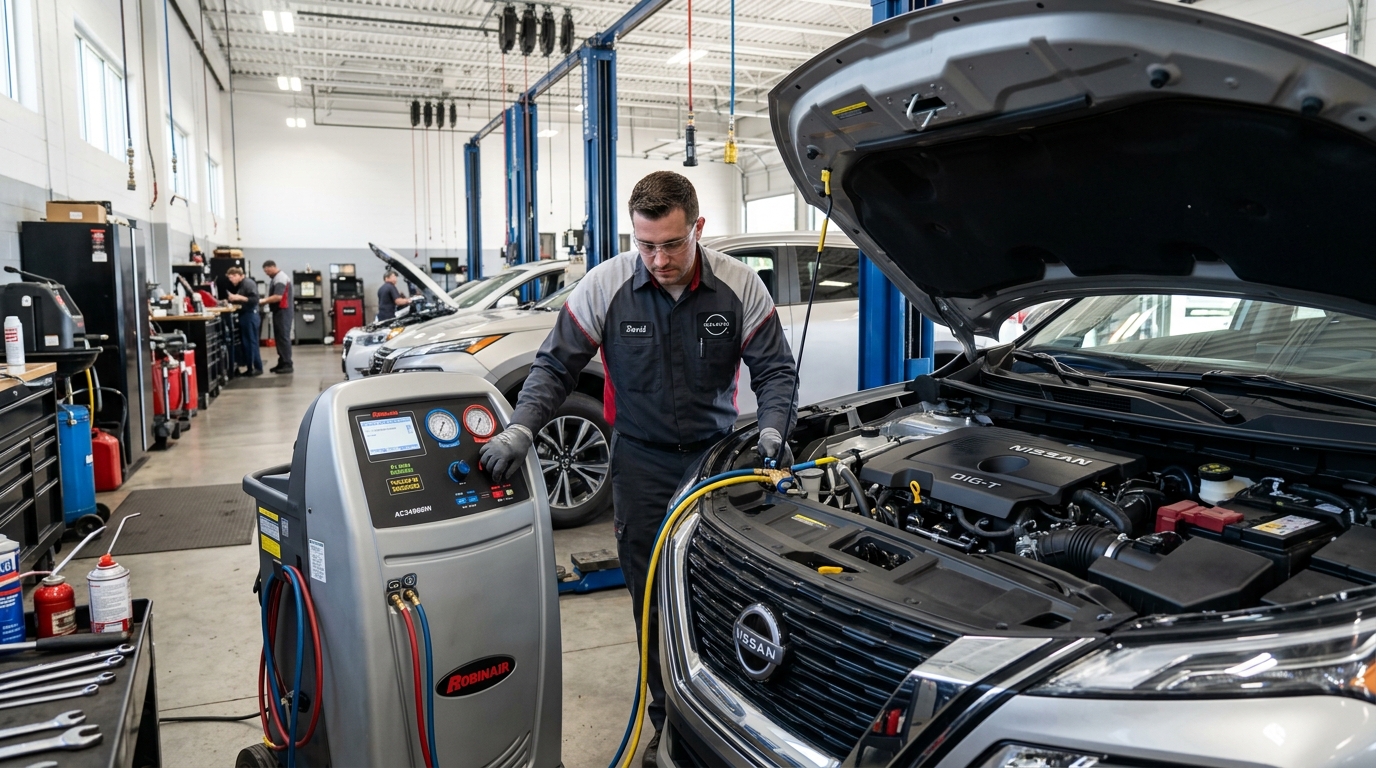
Low refrigerant from a system leak, a failing compressor or compressor clutch, a clogged cabin air filter, or a blocked condenser are the primary causes when a Nissan air conditioning system blows warm air. When operating pressure drops or airflow across the evaporator coil is restricted, the refrigeration cycle cannot absorb interior cabin heat or discharge it outside, leaving the vents pushing ambient or warm air.
Summer weather puts heavy demand on automotive HVAC systems. During peak summer heat along Touhy Avenue in Niles, even a minor refrigerant pressure drop or partial obstruction in front of the vehicle can cause climate control performance to degrade rapidly. In a properly functioning Nissan system, liquid refrigerant absorbs interior heat at the evaporator coil behind the dashboard and transforms into a low-pressure gas. The AC compressor then pumps this gas to the front-mounted condenser, where heat transfers into the outside environment before the cycle repeats.
When any single component in this closed loop underperforms, cabin cooling suffers immediately. Common triggers for warm air output include:
- A refrigerant leak in rubber hoses, aluminum lines, or system O-rings
- A failed AC compressor clutch or worn internal compressor pistons
- A heavily clogged cabin air filter restricting evaporator airflow
- Foreign debris, road grime, or bent fins blocking the front condenser
- A faulty blend door actuator improperly mixing warm heater core air into the vents
- Electrical issues like blown fuses, failed pressure switches, or malfunctioning relays
Whether you drive a 2026 Nissan Rogue SV equipped with a 1.5L engine and automatic climate control, or a 2026 Nissan Altima SR featuring dual-zone climate control, catching cooling problems early protects critical components from thermal stress and internal oil starvation. If your vehicle is struggling to stay cool, visiting our Niles service center location or calling (224) 537-0287 allows certified technicians to perform a full system pressure test and inspection.
Table of Contents
- What Are the Main Components of a Nissan Automotive AC System?
- Could a Dirty Cabin Air Filter Cause My Nissan AC to Blow Warm Air?
- What Usually Causes Low Refrigerant and Leaks in a Nissan AC System?
- What Are the Signs of a Failing Nissan AC Compressor?
- What Can I Check Myself Before Taking My Nissan In for Service?
- Common Questions About Nissan AC Troubleshooting and Maintenance
What Are the Main Components of a Nissan Automotive AC System?
A Nissan automotive AC system relies on six core components operating in a closed loop: the AC compressor, condenser, receiver-drier (or accumulator), thermal expansion valve, evaporator coil, and blower motor. These mechanical, electrical, and thermal units continually transform high-pressure gas into low-pressure liquid to remove heat and humidity from the cabin air.
Understanding how these parts work together makes troubleshooting warm air much easier:
- AC Compressor: Mounted directly to the engine, it pressurizes gaseous refrigerant and circulates compressor oil through the system.
- Condenser: Positioned in front of the radiator, it cools the hot, high-pressure refrigerant gas back into a liquid state using incoming ambient airflow.
- Receiver-Drier / Accumulator: Filters out moisture and contaminants while storing excess liquid refrigerant to ensure steady pressure.
- Thermal Expansion Valve / Orifice Tube: Regulates the flow of liquid refrigerant into the evaporator coil, dropping its pressure and temperature sharply.
- Evaporator Coil: Located behind the dashboard, it absorbs heat and humidity from cabin air as refrigerant expands into a cold gas inside its tubes.
- Blower Motor: Forces interior air across the chilled fins of the evaporator coil and out through the instrument panel vents.
In larger family vehicles like the 2026 Nissan Pathfinder Platinum, which features tri-zone automatic climate control and rear ventilation channels, keeping every stage of this thermal loop pressurized and clean is essential for cooling all three passenger rows uniformly.
Could a Dirty Cabin Air Filter Cause My Nissan AC to Blow Warm Air?
A severely dirty cabin air filter restricts the volume of air passing across the evaporator coil, which reduces cooling performance and often makes vent output feel warm or weak. When dust, dirt, leaves, and environmental debris block the filter media, air velocity drops significantly, preventing cold air from circulating into the passenger compartment effectively.
Restricted airflow creates additional mechanical stress on the HVAC system. Without sufficient air passing across the evaporator coil to transfer heat, the refrigerant inside the coil stays extremely cold. Over time, moisture in the air freezes onto the exterior fins of the evaporator, encasing it in a block of ice. Once the evaporator freezes, airflow stops almost completely, and any air that does squeeze past feels humid and warm.
Routine maintenance prevents these airflow bottlenecks before they start. Current Nissan maintenance schedules recommend replacing the cabin air filter every 20,000 miles under normal driving conditions, or sooner if you frequently travel through heavy dust or dense traffic. Replacing a clogged filter restores proper air velocity across the evaporator, helping your climate control deliver crisp, clean cooling while reducing strain on the blower motor.
What Usually Causes Low Refrigerant and Leaks in a Nissan AC System?
Low refrigerant in a Nissan AC system is almost always caused by physical leaks in flexible rubber hoses, worn O-ring connections, or micro-punctures in the condenser and evaporator coils. Because automotive air conditioning is a hermetically sealed closed loop that does not consume refrigerant during normal vehicle operation, any loss of pressure points directly to a system breach.
Vibration from daily driving, temperature fluctuations, and exposure to road salt gradually degrade rubber seals and fittings over time. In addition, the front condenser is positioned right behind the grille, leaving it vulnerable to small stones and road debris thrown up during suburban stop-and-go driving along Skokie Boulevard. Pinhole punctures in the thin aluminum tubes of the condenser allow refrigerant gas and protective compressor lubricant to seep out slowly.
Attempting to fix low refrigerant by using DIY recharge cans from an auto parts store carries significant risk. These off-the-shelf cans do not seal structural leaks, and adding refrigerant without commercial recovery and manifold pressure gauges can easily overcharge the system. Excess pressure strains the AC compressor, while undercharging starves internal bearings of oil. The correct approach involves applying an ultraviolet dye, pressure-testing with nitrogen, repairing the leaking component, evacuating air and moisture with a vacuum pump, and refilling the system with exact factory-specified refrigerant weight.
What Are the Signs of a Failing Nissan AC Compressor?
Common signs of a failing Nissan AC compressor include squealing or metallic grinding noises when turning on the climate control, an AC compressor clutch that refuses to engage or cycles rapidly on and off, visible oil leaks around the front shaft seal, and vent air that stays warm despite correct refrigerant levels. As internal swash plates, pistons, or shaft bearings wear out, the compressor loses its ability to pump high-pressure refrigerant through the cooling circuit.
Compressor failure typically falls into two categories: mechanical wear and electrical disengagement. Mechanical failure happens when internal metal parts wear down, creating fine metal shavings that contaminate the entire refrigerant loop. Electrical disengagement occurs when the electromagnetic clutch coil fails, preventing the engine accessory belt from turning the compressor shaft even though the engine is running and climate control is switched on.
Listening closely to your vehicle when you activate the AC button provides immediate clues. If you hear a sharp click followed by smooth engine loading, the clutch is operating properly. However, if pressing the button produces a harsh rattling noise, a burning rubber smell from a slipping belt, or no sound at all, the compressor or its drive system requires immediate professional evaluation to prevent complete component seizure.
What Can I Check Myself Before Taking My Nissan In for Service?
Before booking a service visit, you can check that the climate control is set to recirculate mode, inspect the cabin air filter behind the glove compartment, verify that the front bumper and condenser fins are clear of leaves or trash, and confirm that the AC fuse in the engine bay junction box remains intact. Performing these basic visual checks helps rule out simple settings or airflow obstructions before scheduling an in-depth diagnostic test.
Follow this quick troubleshooting checklist:
- Verify Climate Settings: Ensure the temperature dial is turned to its lowest setting, the AC button indicator light is illuminated, and the recirculation button is engaged to avoid pulling in hot outside air.
- Inspect Airflow and Vent Mode: Cycle through vent modes to confirm air discharges from the dash vents rather than sticking on defrost or floor settings due to a blend door error.
- Examine the Cabin Air Filter: Remove the glove box access panel to see if the filter media is caked with dust or dirt.
- Inspect the Front Grille: Look through the lower front bumper to check if plastic bags, cardboard, or accumulated bug debris are blocking airflow to the condenser.
- Listen for Clutch Engagement: Park in a quiet area, open the hood, start the engine, and have an assistant switch the AC on. Listen for the distinct metallic click of the AC compressor clutch engaging.
When drivers bring their Nissan Rogue or Altima in after a hot summer drive, our service technicians start by checking whether the compressor clutch is actively engaging when the climate button lights up. If these basic checks do not resolve warm air output, scheduling express service online gets your vehicle on a diagnostic lift quickly.

Common Questions About Nissan AC Troubleshooting and Maintenance
Addressing air conditioning issues promptly restores driving comfort and protects expensive internal components from secondary damage.
Q: What does it mean if my Nissan AC still blows warm air after a recharge?
When a Nissan AC system continues blowing warm air after adding refrigerant, it indicates that operating pressure has escaped through an unaddressed leak, or that a mechanical or electrical failure is preventing circulation. Common causes include a failed AC compressor clutch, a faulty pressure cut-off switch, a blown relay, or a stuck climate control blend door. Adding refrigerant without repairing underlying leaks or electrical faults will not restore cooling.
Q: What is the most common long-term Nissan AC problem?
The most common long-term issue is gradual refrigerant loss caused by aging rubber O-rings, shaft seals, and subtle corrosion on aluminum lines or condenser fins. Over several years of heat cycles and road vibration, seals lose elasticity, allowing tiny amounts of refrigerant and compressor oil to escape. Annual inspection of system pressures and early replacement of worn seals helps prevent sudden cooling loss during peak summer months.
Q: What should I do if my 2026 Nissan AC is not blowing cold air?
If your 2026 Nissan AC system stops cooling, start by checking your climate control panel settings, ensuring recirculation mode is active and the cabin air filter is clean. If vents continue discharging warm air, avoid running the AC continuously to protect the compressor from operating without adequate oil circulation. Book a diagnostic check with factory-trained technicians to perform pressure testing and electronic fault scans.
Q: How do I know if my Nissan AC has a refrigerant leak?
Signs of a refrigerant leak include a gradual reduction in vent cooling power over several days or weeks, faint whistling or hissing sounds coming from dashboard vents, and dark, oily dirt buildup around AC line fittings or condenser joints. Because compressor oil travels dissolved in the refrigerant, wet or sticky residue at hose connections is a clear indicator of a pressure leak.
Q: Why does my Nissan AC blow cold while driving but warm at a stoplight?
Blowing cold air while cruising on the highway but warming up at a stoplight points to restricted airflow across the front condenser or a failing electric cooling fan. When the vehicle is moving, incoming air cools the condenser naturally. At a standstill, the system relies entirely on the radiator and condenser fan assembly; if the fan motor or relay fails, heat cannot dissipate, causing vent temperatures to rise quickly.
For dependable air conditioning diagnostics and certified care, visit our team at our Niles service location, reach out by giving us a call at (224) 537-0287, and experience the confidence of learning about our Backed By Berman promise today.
© 2026 Star Nissan. All rights reserved.