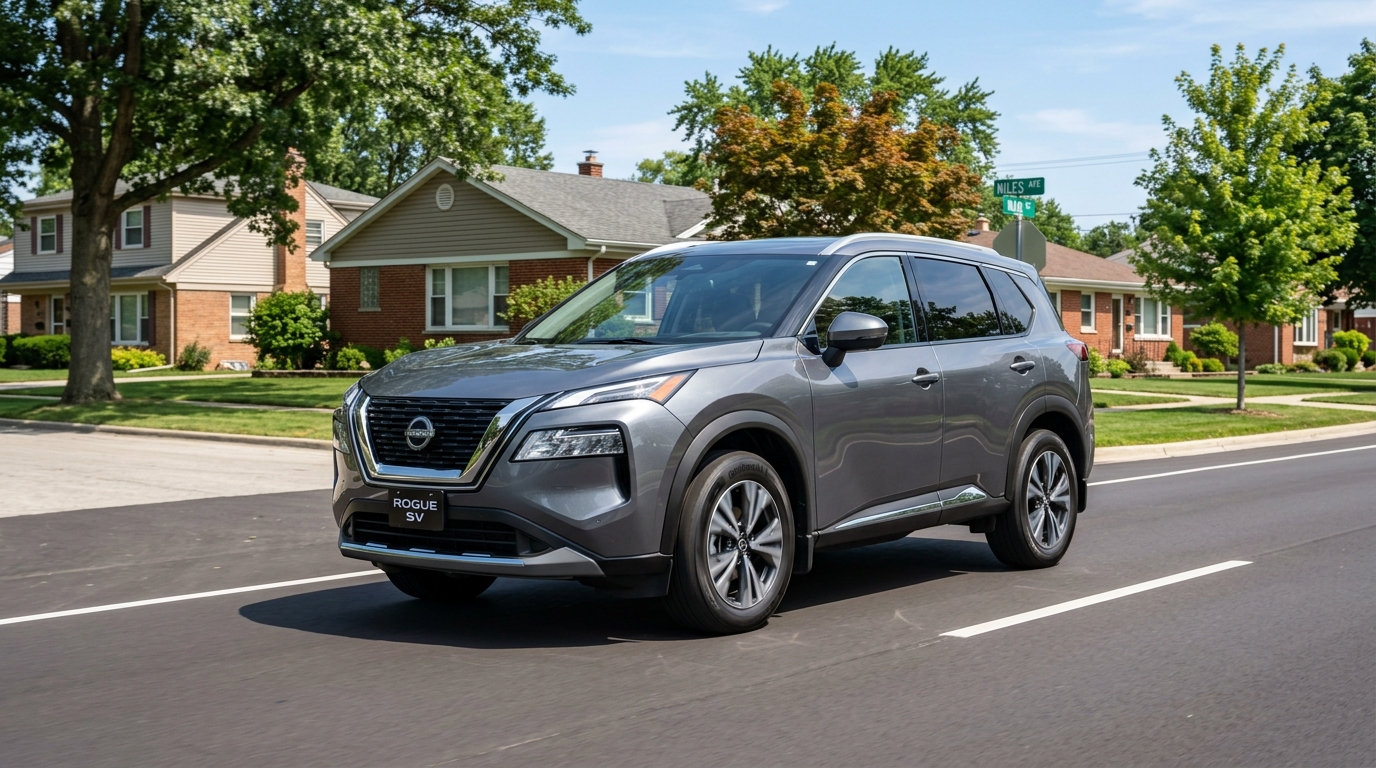
At the 15,000-mile mark, your Nissan requires an engine oil and filter change, a tire rotation, replacement of the in-cabin microfilter, and a comprehensive multi-point inspection. This inspection evaluates critical mechanical and safety systems, including the brake pads, rotors, steering assembly, suspension components, drive shafts, exhaust system, and fluid levels.
Adhering to this second major factory service interval preserves engine efficiency, maintains balanced tire wear, and ensures your interior air quality remains clean. Daily driving along busy corridors like Touhy Avenue subjects your vehicle to frequent stop-and-go acceleration and heavy seasonal road salt. Over time, road debris and thermal cycles break down vital lubricants and clog filtration media.
During a standard 15,000-mile service, factory-trained technicians execute a structured checklist designed to catch minor wear before it affects drivability:
- Engine Oil and Filter Service: Draining aged oil and installing fresh synthetic oil alongside a new OEM oil filter to maintain internal engine lubrication.
- Tire Rotation and Brake Inspection: Repositioning tires to promote even tread wear while measuring brake pads and testing rotor condition.
- In-Cabin Microfilter Replacement: Swapping out the cabin air filter to remove trapped pollen, road dust, and environmental allergens from your HVAC system.
- Underbody and Chassis Check: Inspecting drive shaft boots, steering gear linkages, fuel lines, and exhaust hangers for damage, corrosion, or loose fasteners.
Staying on schedule protects your vehicle against unexpected wear and preserves factory warranty coverage. You can drop by our service center location or give our advisors (224) 537-0287 a quick call to plan your visit.
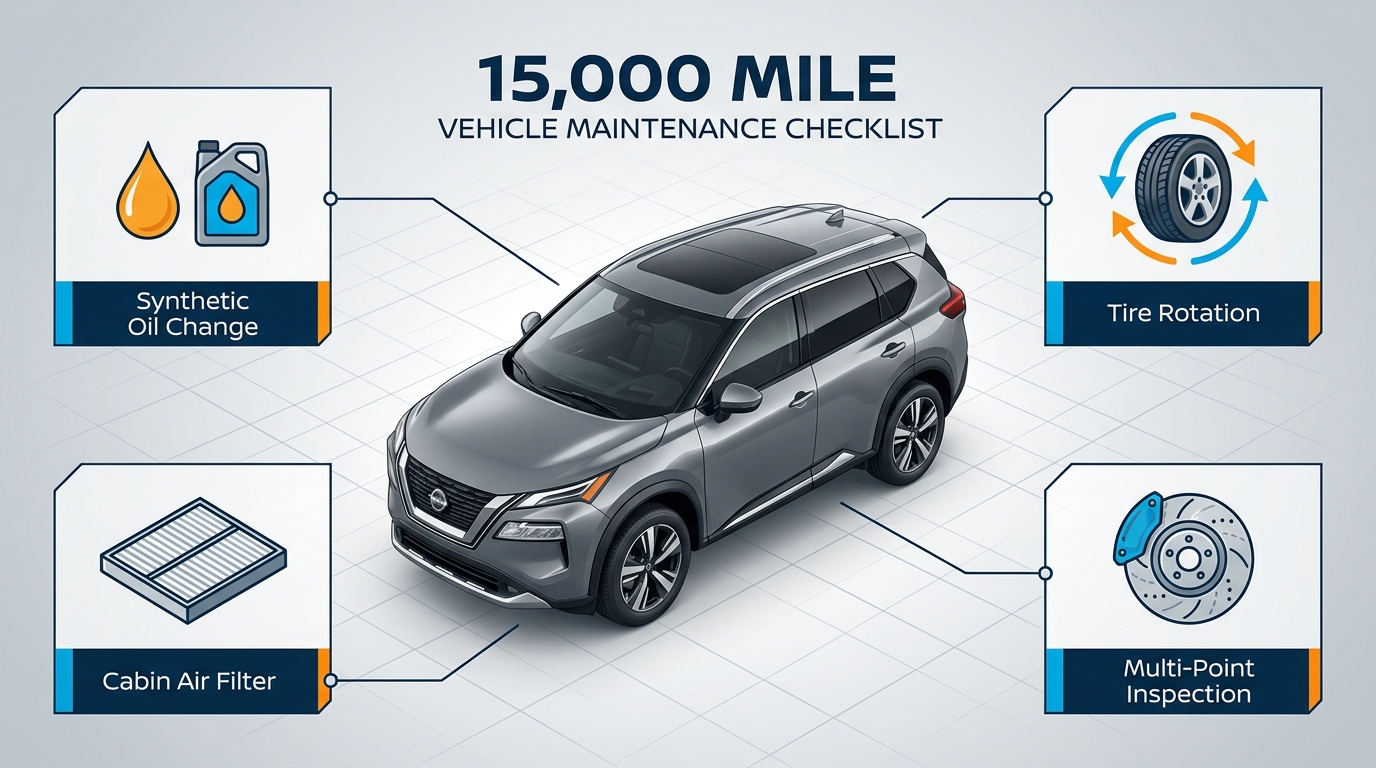
Table of Contents
- Does Every Nissan Model Require the Same 15,000-Mile Service Schedule?
- Which Fluids and Under-Hood Components Are Checked at 15,000 Miles?
- Can You Perform 15,000-Mile Maintenance Yourself or Should You Use a Professional?
- How Much Does 15,000-Mile Service Cost and Is Independent Shop Pricing Comparable?
- Why Choose Factory-Certified Nissan Service and How Long Does the Visit Take?
- Frequently Asked Questions About Nissan 15,000-Mile Scheduled Maintenance
- How to Schedule Your Nissan 15,000-Mile Service Appointment in Niles
Does Every Nissan Model Require the Same 15,000-Mile Service Schedule?
Specific maintenance tasks at 15,000 miles vary depending on your Nissan model's powertrain, drivetrain configuration, and your typical driving environment. Gas-powered models rely on internal combustion maintenance, whereas electric models focus heavily on high-voltage cooling systems, chassis checks, and brake hydraulics.
Gasoline sedans and crossovers, such as the 2026 Nissan Altima SV with its 2.5L engine and Xtronic CVT, require conventional engine oil changes and filter replacements. In contrast, electric models like the Nissan LEAF skip engine oil services entirely at 15,000 miles, replacing them with a 12V battery load test, tire condition check, and brake system flush inspection.
Operating conditions also dictate whether your vehicle follows a standard or severe-duty maintenance schedule. Driving habits that qualify as severe service include:
- Repeated short trips under 10 miles in freezing temperatures
- Extensive idling or prolonged stop-and-go suburban commuting
- Driving regularly on dusty, unpaved, or heavily salted winter roads
- Towing trailers or carrying heavy rooftop cargo loads
If your vehicle operates under severe conditions, technicians may recommend inspecting the engine air filter earlier or evaluating transfer case and differential fluids on all-wheel-drive models. Drivers seeking efficient routine care can book our express maintenance options for rapid turnaround times.
Which Fluids and Under-Hood Components Are Checked at 15,000 Miles?
A 15,000-mile inspection includes a complete evaluation of all under-hood fluid levels and mechanical components to confirm proper operating pressures and thermal protection. Technicians test fluid clarity, check for microscopic leaks, and verify that mechanical linkages remain properly tensioned.
Fluid checks during this visit cover the entire engine bay to prevent premature component failure:
- Engine Coolant: Testing freeze-point protection levels and checking expansion tanks for signs of contamination.
- Brake Fluid: Checking reservoir levels and inspecting lines for moisture absorption or hydraulic degradation.
- Windshield Washer Fluid: Topping off the reservoir with seasonal cleaning solutions.
- Xtronic CVT Fluid: Inspecting casing seals and cooler lines for weeping or fluid oxidation.
Under the hood, technicians inspect mechanical hardware for physical wear or age-related fatigue. Drive belts are examined for edge fraying or rib cracking, while radiator and heater hoses are checked for soft spots or swollen fittings. The 12V battery undergoes a digital conductance test to verify cold-cranking capacity, and battery terminals are cleaned of corrosive buildup. The engine air filter is also inspected; while replacement often occurs closer to 20,000 miles, dusty driving conditions may warrant an early swap.
Can You Perform 15,000-Mile Maintenance Yourself or Should You Use a Professional?
Simple maintenance tasks like replacing the cabin air filter and topping off washer fluid can be handled at home, but comprehensive 15,000-mile maintenance requires professional equipment and diagnostic tools. Critical safety steps—such as measuring brake rotor lateral runout and evaluating suspension torque—demand specialized automotive knowledge.
Performing a proper tire rotation requires lifting the entire vehicle safely to execute front-to-rear or cross-rotation patterns based on your drivetrain. Professional service bays utilize hydraulic lifts and calibrated torque wrenches to ensure wheel lug nuts are tightened to exact factory specifications, preventing hub distortion.
Professional technicians also connect dedicated OBD2 diagnostic scanners to clear maintenance algorithms and check for pending trouble codes stored in system control modules. Utilizing genuine OEM parts during professional visits ensures that replacement filters match exact airflow and filtration parameters, protecting your factory warranty and maintaining long-term vehicle dependability.
How Much Does 15,000-Mile Service Cost and Is Independent Shop Pricing Comparable?
A standard 15,000-mile service for a Nissan varies based on vehicle architecture, engine oil capacity, and model-specific filter requirements. Please contact the dealership for current service pricing. While independent repair shops may advertise lower baseline labor rates, dealership estimates incorporate factory-certified expertise, specialized tooling, and exact-fit components.
Local drivers near Skokie evaluating service quotes should consider the long-term value delivered by factory-trained specialists. Independent garages frequently utilize universal multi-vehicle fluids or aftermarket filters that may not meet strict Nissan engineering standards. For example, servicing a continuous variable transmission requires exact NS-3 CVT fluid friction formulations to prevent internal belt slippage.
Factory service centers provide transparent pricing structures that bundle required inspections, filter replacements, and multi-point checks into single transparent packages. Furthermore, work performed at an authorized dealership is documented in national vehicle history databases, establishing verifiable maintenance records that support future resale values.
Why Choose Factory-Certified Nissan Service and How Long Does the Visit Take?
A typical 15,000-mile scheduled maintenance visit takes approximately 1 to 2 hours when performed by factory-certified technicians. Choosing authorized service ensures your vehicle receives precise mechanical care using specialized factory equipment calibrated specifically for Nissan engineering standards.
Certified technicians complete rigorous brand-specific training modules, allowing them to perform detailed inspections efficiently while identifying subtle wear patterns that untrained mechanics might overlook. During your visit, technicians cross-reference your vehicle's VIN against active software updates or technical service bulletins to ensure all electronic modules operate on current programming.
While your vehicle is in the bay, you can relax in a clean, comfortable customer lounge equipped with complimentary Wi-Fi and refreshments. Every service concludes with a digital multi-point inspection report delivered straight to your mobile device, providing clear visibility into brake pad percentage, tire tread depth, and upcoming maintenance requirements.
Frequently Asked Questions About Nissan 15,000-Mile Scheduled Maintenance
Q: Is the 15,000-mile service required to keep my Nissan factory warranty valid?
Adhering to factory-recommended maintenance intervals and maintaining documented service receipts is necessary to keep your powertrain and bumper-to-bumper warranty protections intact. Utilizing factory service ensures every maintenance action is recorded accurately in official owner databases while fitting exact genuine OEM parts. You can review our dealership commitment details to learn more about our service guarantees.
Q: What happens if I exceed my 15,000-mile service mark by a few hundred miles?
Exceeding the service interval by a brief margin will not cause immediate mechanical damage, but continuing to drive on degraded synthetic oil accelerates internal friction and engine wear. Clogged filters restrict cabin ventilation and allow road dust to enter internal systems. Scheduling your appointment as close to the 15,000-mile mark as possible ensures consistent vehicle protection.
Q: How do cold Illinois winters impact my 15,000-mile service requirements?
Freezing winter temperatures, road salt, and snow slush place heavy demands on your 12V battery, brake hydraulics, and rubber underbody seals. During cold-weather months, technicians pay extra attention to battery reserve capacity, inspect brake pad slides for corrosion, and verify that engine coolant freeze protection meets severe winter thresholds.
Q: Does my engine air filter always require replacement at 15,000 miles?
The engine air filter is thoroughly inspected during the 15,000-mile visit, but actual replacement depends on air quality and driving conditions. Vehicles operated primarily in heavy traffic or dusty environments may require a fresh filter at 15,000 miles, whereas vehicles driven in cleaner conditions can often safely wait until 20,000 miles.
Q: Why is the cabin air filter replaced at the 15,000-mile mark?
The in-cabin microfilter strips airborne dust, seasonal pollen, soot, and debris from incoming air before it reaches the interior cabin. Replacing this filter every 15,000 miles protects cabin air quality, prevents unpleasant odors, and protects HVAC blower motors from straining against restricted airflow. Explore our team and facility standards to see how we handle routine maintenance care.
How to Schedule Your Nissan 15,000-Mile Service Appointment in Niles
Protecting your vehicle's longevity and performance begins with staying current on factory maintenance intervals. Bringing your car in for its 15,000-mile service ensures fresh lubricants, clean interior air filters, and thorough mechanical inspections that safeguard your daily drive.
Our factory-certified service center is conveniently situated to serve local vehicle owners with efficient service and expert care. You can reserve your preferred time online or speak directly with our service advisors to coordinate your upcoming maintenance visit.
To plan your visit today, check our Niles facility location for easy driving directions, or give our service desk (224) 537-0287 a quick call to book your appointment.
© 2026 Star Nissan. All rights reserved.