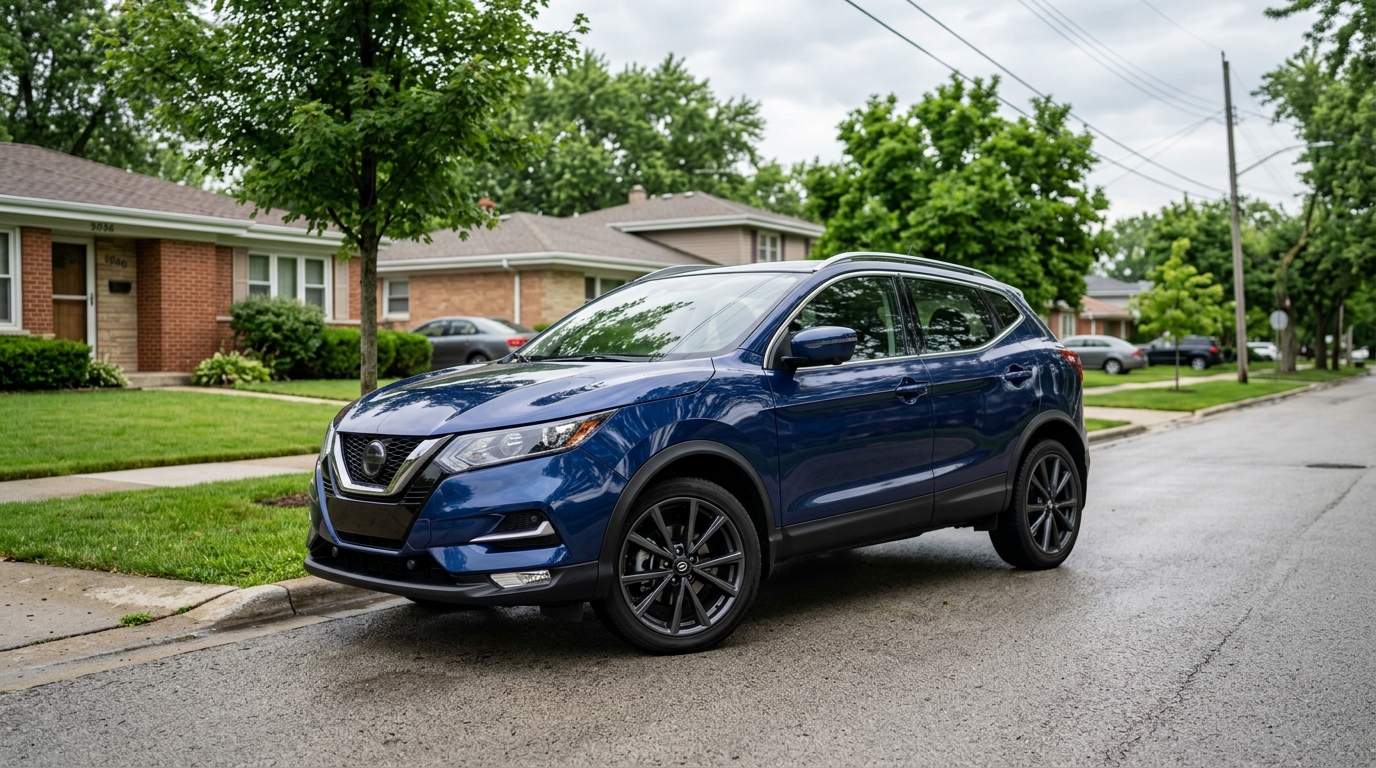
Maintaining your vehicle's braking system is one of the most critical aspects of routine automotive care. Drivers navigating the busy intersections around Golf Mill Shopping Center in Niles experience frequent stop-and-go patterns that naturally accelerate front brake wear. For instance, a crossover like the 2026 Nissan Rogue, equipped with a 1.5L engine and an Xtronic CVT, relies heavily on its front brakes to handle the majority of the stopping force during daily suburban commutes.
Most Nissan models do not have a fixed mileage interval for pad replacement. Instead, the manufacturer schedules regular inspections and recommends replacing the friction material once it wears down to about 3 mm or if you notice a reduction in braking performance.
To ensure your vehicle remains safe on the road, you can schedule express maintenance online or call (224) 537-0287 to speak with our service advisors. If you are ready to visit us, you can easily get directions to our service center located at 5757 W Touhy Ave, Niles, IL 60714.
Table of Contents
- How Often to Schedule Nissan Brake Pad Replacements
- Recognizing the Warning Signs of Worn Nissan Brake Pads
- Nissan Brake Pad Thickness Specs from Factory New to Wear Limits
- Understanding Nissan Brake Replacement Costs and Rotor Wear
- Warranty Protection and Practical Steps for Deciding When to Service Your Brakes
- Common Questions About Nissan Brake Maintenance
- Schedule Your Professional Brake Inspection at Star Nissan
How Often to Schedule Nissan Brake Pad Replacements
How many miles can you expect to get out of a set of factory Nissan brake pads? Under typical mixed driving conditions, front brake pads on popular models like the Altima and Rogue often last between 30,000 and 45,000 miles. Rear brake pads experience less load and commonly reach 50,000 to 70,000 miles before requiring replacement.
However, suburban driving habits can shift these numbers. A commuter traveling from Skokie toward downtown Chicago on a daily basis will experience more frequent stops, which can shorten the lifespan of front pads to around 25,000 miles.
Heavier vehicles like the 2026 Nissan Pathfinder, which features a robust 3.5L engine and a 9-speed automatic transmission, experience different wear dynamics. When configured for towing up to 6,000 lbs, the increased load puts additional stress on the braking system. For these larger SUVs and trucks, severe-use maintenance schedules recommend brake inspections as often as every 5,000 miles or 6 months to catch accelerated wear early.
You can visit our homepage to explore our full suite of automotive services, or see our community involvement to learn how we support local neighborhoods. Before booking your visit, be sure to contact us for current service information to find valuable maintenance offers.
Recognizing the Warning Signs of Worn Nissan Brake Pads
Braking systems are engineered to provide clear physical and auditory warnings when the friction material is nearing the end of its useful life. The most common early warning is a high-pitched squealing sound. This noise is produced by a small metal wear indicator built into the pad that scrapes against the rotor when the brakes are applied. If this sound is ignored, it will eventually transition into a harsh, metallic grinding noise, indicating that the pad material is completely gone and metal-on-metal contact is damaging your rotors.
Drivers should also pay close attention to the physical feedback from the vehicle. A pulsating sensation or vibration felt through the steering wheel or the brake pedal during deceleration often points to unevenly worn pads or warped rotors. Additionally, if the brake pedal feels spongy or travels significantly further toward the floorboard before the vehicle begins to slow down, the system requires immediate professional attention.
In a sedan like the 2026 Nissan Altima, which features a fuel-efficient 2.5L engine and an EPA-estimated 26 city / 36 hwy rating, maintaining precise braking response is key to preserving its agile handling. If your dashboard brake warning light illuminates, it could indicate low brake fluid levels resulting from worn pads. If your brakes fail completely or you experience an emergency on the road, remember that Nissan owners have access to manufacturer-backed support. You can call Nissan Roadside Assistance: 800-225-2476 for professional towing directly to an authorized service center.
To find out more about our commitment to high-quality care, you can learn about our dealership and our expert staff. If you notice any of these warning signs, please contact our service team immediately to ensure your vehicle remains safe to drive.
Nissan Brake Pad Thickness Specs from Factory New to Wear Limits
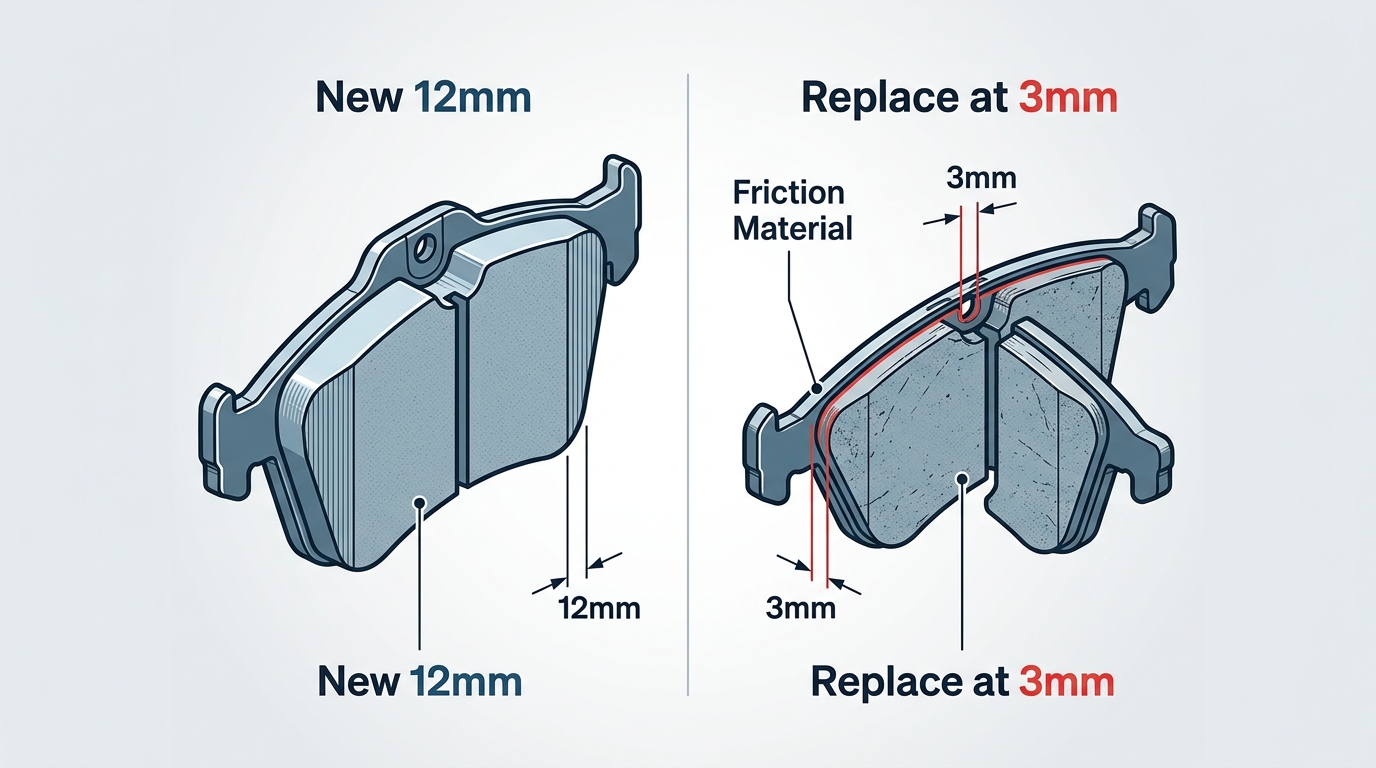
Understanding the physical measurements of your braking components helps demystify the recommendations made during a multi-point inspection. Brand new Nissan brake pads typically measure between 10 mm and 12 mm in thickness, which includes the metal backing plate and the thick layer of high-friction material. As you drive, this friction material slowly wears away to slow the vehicle.
During a routine inspection, technicians measure the remaining thickness of this friction layer. A measurement of 5 mm to 6 mm indicates that the pads are roughly half-worn. Once the thickness drops to about 3 mm, replacement is highly recommended because the remaining material cannot safely dissipate heat, leading to reduced stopping power. A thickness of 2 mm is the absolute minimum safety limit; driving on pads thinner than this risks immediate rotor damage and brake failure.
At Star Nissan, we prioritize transparency and customer trust, which is why we invite you to learn about our Backed By Berman program and the peace of mind it offers. If you prefer to stop by for a quick physical inspection of your vehicle's brakes, you can get directions to our Niles location to visit our service drive.
Understanding Nissan Brake Replacement Costs and Rotor Wear
When planning for brake maintenance, understanding the relationship between pads and rotors can help you avoid unexpected expenses. The cost of replacing brake pads and rotors generally ranges between $350 and $750 per axle, depending on the specific Nissan model and the type of parts selected. While it is sometimes possible to replace only the brake pads, rotors must be replaced or resurfaced if they exhibit deep grooves, rust, or warping.
In our local cold-winter climate, road salt used during the winter months poses a significant threat to braking components. Salt and moisture can accumulate on the brake calipers and rotors, leading to corrosion and pitting. This rust roughs up the rotor surface, which acts like sandpaper against the brake pads, causing them to wear out much faster than they would in milder climates. Our certified technicians always check for corrosion during inspections to prevent premature pad wear.
We take pride in delivering honest, high-quality service, and we encourage you to read our customer reviews to see what other local drivers say about their experiences. To help keep your maintenance costs manageable, you can also explore our service incentive programs for current specials on brake services.
Warranty Protection and Practical Steps for Deciding When to Service Your Brakes
A common concern among vehicle owners is whether choosing specific parts or service centers will affect their factory warranty coverage. Installing aftermarket brake pads does not void your Nissan vehicle warranty. Under federal law, manufacturers cannot void a warranty simply because an aftermarket part was installed, unless that specific part is proven to have caused damage to another component. However, using genuine Nissan OEM brake pads is highly recommended. OEM pads are engineered specifically for your vehicle's weight and braking system, ensuring optimal stopping power, quieter operation, and a precise fit that matches the original factory performance.
In our experience on the service drive, owners frequently ask what practical steps they can take to monitor their brakes between service visits. To decide when to service your brakes, follow these practical steps:
- Listen closely for any squealing or scraping sounds when stopping.
- Check your brake fluid level; a low reservoir often indicates that the caliper pistons are extended further because the pads are thin.
- Inspect the pad thickness visually through the spokes of your wheels.
- Keep a log of your mileage and schedule a professional inspection every 12,000 to 15,000 miles.
Whether you are driving a vehicle you own or want to compare buying vs leasing options for your next vehicle, keeping up with routine maintenance preserves its value. If you need assistance, you can locate us using our service center map or dial (224) 537-0287 to speak directly with an advisor.
Common Questions About Nissan Brake Maintenance
Q: What tools do I need to replace Nissan brake pads myself?
To replace the brake pads yourself, you will need a hydraulic jack and heavy-duty jack stands, a lug wrench to remove the wheels, a socket set for the caliper bolts, and a C-clamp or specialized brake caliper tool to compress the caliper piston. A torque wrench is also essential to ensure all hardware is reassembled to factory specifications.
Q: Does heavy winter road salt affect my Nissan's brakes?
Yes, heavy winter road salt can cause rust and corrosion on the brake rotors and calipers. This corrosion can cause the brake pads to bind in their brackets or wear unevenly, leading to premature pad degradation and reduced stopping performance.
Q: Why do my brakes squeak only first thing in the morning?
Morning squeaking is usually caused by a thin layer of surface rust or moisture that accumulates on the iron brake rotors overnight. This light rust is harmlessly swept away after the first few stops of your drive, and the noise should disappear quickly.
Q: Can I replace just the front brake pads and not the rears?
Yes, you can replace only the front brake pads if the rear pads still have sufficient thickness. Because front brakes handle up to 70 percent of the stopping load, they typically wear out much faster than the rear brakes.
Q: What should I do if my Nissan brake warning light stays illuminated?
If the brake warning light remains on, it typically indicates a low brake fluid level or an issue with the anti-lock braking system. You should have the vehicle inspected by a professional technician immediately to diagnose the system and ensure it is safe to operate.
Schedule Your Professional Brake Inspection at Star Nissan
Your safety on the road depends entirely on the reliability of your vehicle's braking system. At Star Nissan, our factory-trained technicians use state-of-the-art diagnostic tools and genuine OEM parts to keep your vehicle performing at its best. Do not wait for a squeal to become a grind. We invite you to schedule express maintenance online when convenient for a comprehensive brake inspection and professional care.
© 2026 Star Nissan. All rights reserved.