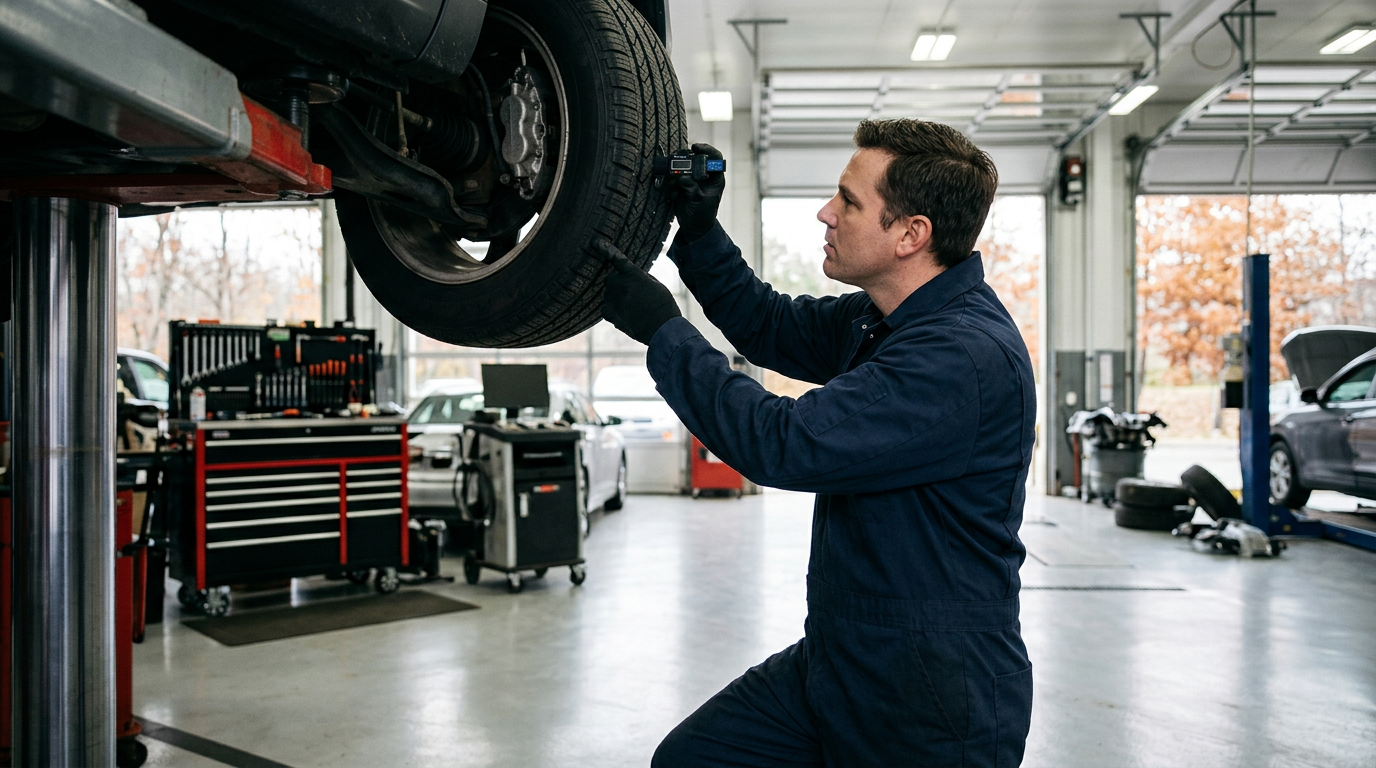
 Changing seasons alter engine fluid viscosity, tire inflation pressure, battery charge efficiency, and rubber seal flexibility, requiring winter freeze preparation in autumn and post-winter wear recovery in spring. Freezing temperatures drop tire pressure by 1 PSI per 10-degree decrease and strain 12V batteries, while road salt accelerates undercarriage corrosion. Aligning synthetic oil changes, brake inspections, and fluid replacements with seasonal transitions prevents premature component breakdown and preserves factory warranty protection.
Suburban commuting and regional Midwest weather shifts subject vehicles to harsh operational demands. Prolonged winter freezes cause engine oil to thicken upon startup, delaying immediate lubrication to upper valvetrain components. Conversely, extreme summer heat accelerates fluid oxidation and thermal degradation in high-stress components like the continuous variable transmission. Transitioning between seasons without adjusting care routines leaves vital systems vulnerable to accelerated friction and internal wear.
Routine seasonal maintenance relies on adapting factory maintenance intervals to local climate realities. Following a strict maintenance calendar ensures that essential protective additives in motor oil, engine coolant, and hydraulic brake fluid remain fully active year-round. You can reach out to our service center on Touhy Avenue or give our team a quick call to review your model's specific seasonal recommendations.
Table of Contents
- What Winter Maintenance Does Your Nissan Rogue Need for Niles Freezes?
- Which Spring Maintenance Services Restore Your Nissan After a Midwest Winter?
- How Do Mileage Milestones Align With Seasonal Maintenance Demands?
- Why Trust Certified OEM Technicians for Your Nissan Seasonal Service?
- Common Questions About Nissan Seasonal Maintenance
- Schedule Your Seasonal Nissan Maintenance at Star Nissan Today
What Winter Maintenance Does Your Nissan Rogue Need for Niles Freezes?
Winter maintenance for the 2026 Nissan Rogue requires load-testing the 12V battery, setting cold tire pressure to between 33 to 35 PSI, verifying a 50/50 engine coolant freeze protection ratio down to -30°F, and installing low-temperature wiper blades. Cold weather reduces battery chemical activity, making cold-cranking amp testing essential before sub-zero winter temperatures arrive.
During freezing periods in Niles, ambient temperature drops directly reduce tire air pressure, causing underinflation that degrades handling, fuel economy, and tread life. Our technicians routinely check tire pressure drops on vehicles like the 2026 Nissan Rogue equipped with a 1.5L VC-Turbo engine, ensuring pressure is set when tires are cold. Proper pressure maintenance helps the vehicle's intelligent all-wheel-drive system distribute torque effectively across icy or snow-covered surfaces.
Winter road treatment involves heavy application of rock salt and liquid magnesium chloride, which cling to exposed metal underbody parts. Over several winter seasons, chemical residue accelerates corrosion on steel brake lines, exhaust hangers, and lower suspension control arms. For larger family vehicles like the 2026 Nissan Pathfinder powered by a 3.5L V6 engine or the 2026 Nissan Frontier utilizing a 3.8L V6 engine, protective undercarriage washes and thorough brake inspections prevent rust accumulation from binding brake calipers or weakening hydraulic fittings.
- Battery Cold-Cranking Test: Verifies that the 12V battery can deliver adequate starting amperage during sudden freeze events.
- Cold Tire Inflation Calibration: Restores proper cold inflation levels to compensate for pressure loss caused by falling ambient temperatures.
- Coolant Freeze Point Assessment: Confirms anti-corrosion additives and ethylene glycol concentration shield the engine block down to sub-zero thresholds.
- Heavy-Duty Wiper & Washer Upgrades: Replaces worn blades with winter-rated rubber boots and refills reservoirs with low-freeze washer fluid rated to -20°F.
Which Spring Maintenance Services Restore Your Nissan After a Midwest Winter?
Spring maintenance restores wheel alignment altered by winter pothole impacts, removes accumulated de-icing chemical residue from underbody components, replaces saturated cabin microfilters, and evaluates brake pads for corrosion. Rectifying winter wear in early spring prevents uneven tire wear patterns and preserves steering precision.
Impacts with frozen road craters frequently knock wheel toe and camber settings out of factory specification. Even minor alignment deviations cause vehicles like the Nissan Sentra or Altima to pull toward the shoulder, scrubbing tire tread unevenly and increasing rolling resistance. Combining a four-wheel alignment check with routine tire rotation balances tread wear across all four positions, extending overall tire life.
| Maintenance Service | Primary Winter Impact Addressed | Vehicle Performance Benefit |
|---|---|---|
| Four-Wheel Alignment | Pothole and curb impact damage | Restores tracking, stops tire scrubbing |
| Cabin Microfilter Change | Salt dust, debris, spring pollen | Optimizes HVAC airflow, traps allergens |
| Undercarriage Wash | Salt and magnesium chloride build | Halts structural and brake line rust |
| Brake System Service | Surface rust on rotors and pads | Restores smooth, quiet stopping power |
Spring allergy season also demands attention to the vehicle's interior environment. Nissan recommends replacing the genuine microfilter every 15,000 miles or once per year. During winter, the filter traps road dirt, salt dust, and soot; replacing it in spring restores full HVAC blower volume and clears airborne allergens. Commuters driving through Skokie can easily maintain peak cabin air quality by booking our express maintenance service for quick filter replacements.
How Do Mileage Milestones Align With Seasonal Maintenance Demands?
Nissan major maintenance milestones at 30,000, 60,000, 90,000, and 120,000 miles build upon standard 5,000 to 7,500-mile synthetic oil change intervals by addressing mechanical fluid breakdown and ignition wear. Severe driving schedules recommend shorter intervals for vehicles subjected to short trips, idling, and severe freeze cycles.
At the 30,000-mile checkpoint, flushing brake hydraulics is a priority service requirement. Standard DOT 3 brake fluid is hygroscopic, meaning it steadily absorbs moisture from high-humidity air over time. During cold weather, absorbed water creates internal rust inside brake calipers; during intense summer heat, that same moisture lowers the fluid's boiling point, leading to a spongy brake pedal. Exchanging brake fluid at 30,000 miles ensures responsive stopping power under all climatic conditions.
Drivetrain care intensifies at higher mileage thresholds to offset long-term mechanical stress:
- 60,000-Mile Milestone: Includes fluid replacement for the Xtronic CVT using genuine NS-3 transmission fluid to protect internal steel drive belts and pulleys from thermal shearing.
- 90,000-Mile Milestone: Replaces long-life iridium spark plugs to prevent engine misfires, rough idling, and fuel efficiency loss as electrode gaps widen over time.
- 120,000-Mile Milestone: Encompasses a complete engine coolant exchange and differential fluid service for all-wheel-drive models, ensuring internal heat exchangers remain free of corrosion.
Vehicles that perform heavy work, such as a 2026 Nissan Pathfinder rated for up to 6,000 lbs of towing or a 2026 Nissan Frontier rated for up to 6,680 lbs of towing, benefit from aligning severe-schedule fluid changes with seasonal shifts to protect transmission and differential gears.
Why Trust Certified OEM Technicians for Your Nissan Seasonal Service?
Certified Nissan service centers utilize factory-trained technicians, specialized diagnostic software, and genuine OEM parts formulated specifically for your vehicle's mechanical design. Utilizing factory-approved components maintains original engineering standards and safeguards your vehicle's 5-year/60,000-mile powertrain warranty coverage.
Under federal regulations like the Magnuson-Moss Warranty Act, vehicle owners have the legal right to service their vehicles at any qualified facility without automatically voiding factory warranties. However, installing incorrect fluid types—such as using aftermarket transmission fluid instead of genuine Nissan NS-3 fluid in continuous variable transmissions—can cause internal component failure that standard warranties will not cover. Factory technicians ensure exact fluid specifications and precise fill volumes every time.
Authorized service departments also streamline vehicle maintenance by maintaining centralized electronic service records directly linked to Nissan databases. Every time your vehicle enters the service bay, technicians scan for open manufacturer service campaigns, control module software updates, and safety recall notices. Completing these checks alongside seasonal oil updates ensures your vehicle operates with the latest factory calibration.
Common Questions About Nissan Seasonal Maintenance
Q: What defines "severe driving conditions" for Nissan vehicles in Illinois?
Driving qualifies as severe if your daily routine includes short trips under 10 miles, extensive idling in congested traffic, towing trailers, or driving on salt-treated roads during winter freezes. Most suburban commuters meet these criteria, making 5,000-mile synthetic oil changes and early fluid checks ideal for protecting high-stress engine and transmission parts.
Q: How frequently should engine coolant levels be inspected during winter?
Engine coolant levels should be inspected monthly and checked at every oil change to confirm the reservoir remains filled to the expansion line with a proper 50/50 antifreeze mixture. Maintaining correct coolant concentration prevents fluid freezing inside the radiator core and guards against internal engine block corrosion.
Q: What signs indicate a Nissan battery is failing after winter strain?
Key signs of battery failure include slow engine cranking during morning starts, dimming headlights when idling, clicking sounds upon turning the ignition key, or a battery age exceeding three to five years. A quick battery load test measures remaining cold-cranking capacity to prevent unexpected battery failure.
Q: Why should cabin air filters be changed right after winter ends?
Cabin air filters trap salt dust, soot, and road debris carried through HVAC intakes during winter driving. Changing the filter in spring clears trapped particulates before pollen season begins, optimizing cabin airflow and restoring cooling efficiency for warm weather. You can learn about our team history and service standards to see how our maintenance protocols keep your vehicle performing at its best.
Q: How does documented seasonal dealership care protect vehicle resale value?
Documenting routine seasonal care through an authorized dealer creates a verified, centralized vehicle history report. Prospective buyers and trade-in valuation tools recognize genuine OEM maintenance records as proof of proper care, yielding higher resale value. Explore our dealership commitment programs to learn more about our complete service support.
Schedule Your Seasonal Nissan Maintenance at Star Nissan Today
Maintaining a consistent seasonal service routine protects your vehicle against extreme Midwest temperature swings, prolongs drivetrain life, and preserves peak efficiency. From pre-winter battery checks to post-winter pothole wheel alignments, our factory-certified technicians provide comprehensive care tailored to your exact Nissan model.
Visit our Touhy Avenue location or call our team at (224) 537-0287 to arrange your seasonal inspection. We look forward to providing the expert maintenance your vehicle needs for safe, reliable driving in every season.