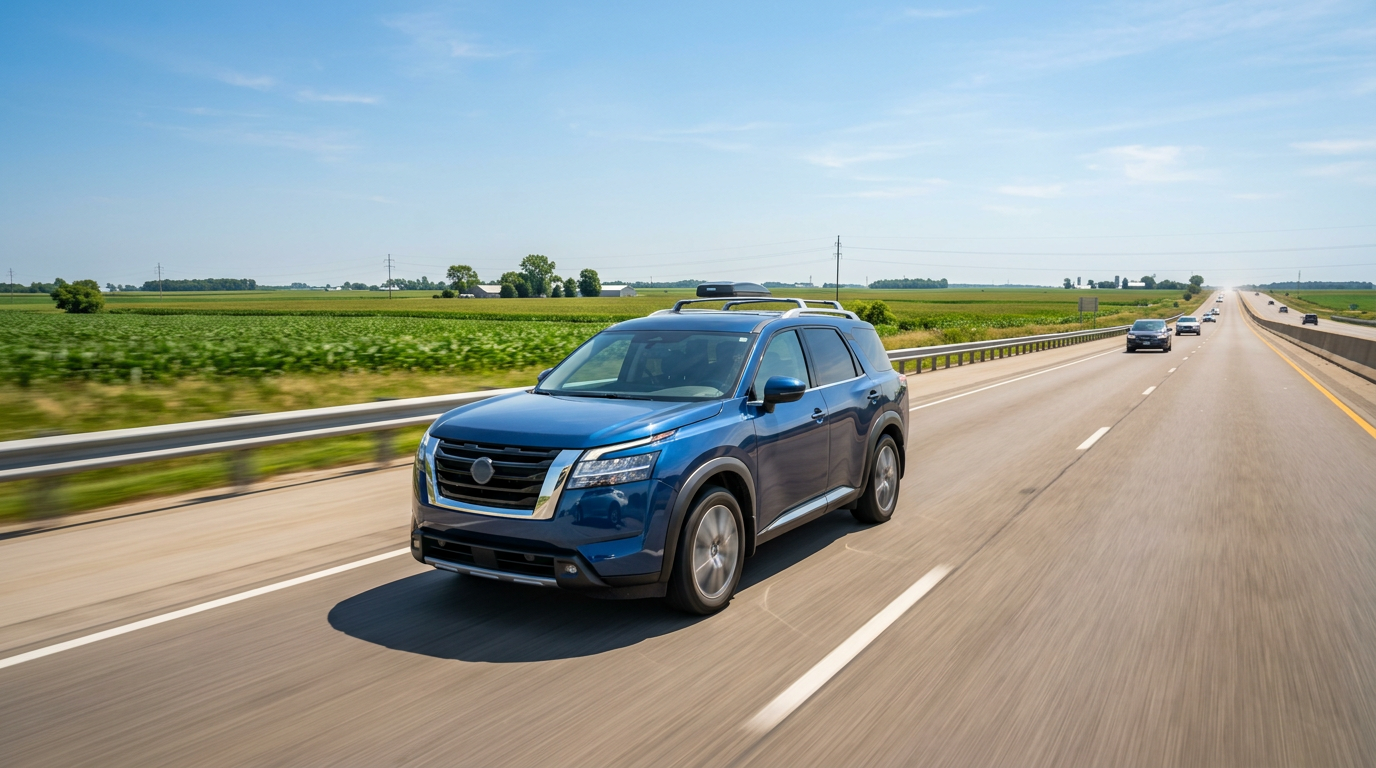
Summer driving across Illinois places unique, sustained demands on your vehicle's mechanical systems. High ambient temperatures, increased passenger weight, and long stretches of high-speed interstate travel combine to test the limits of your vehicle's engine, cooling system, and tires. When preparing for a long journey, ensuring that your vehicle is mechanically sound is the most effective way to prevent unexpected breakdowns on the highway. Proactive preparation helps protect your family and ensures that your trip proceeds exactly as planned.
The flat, suburban routes around Niles demand consistent stop-and-go braking, but transitioning onto the open interstate means your powertrain must handle sustained speeds in high ambient temperatures. This transition from local driving to prolonged highway cruising increases the thermal load on your engine and transmission. Heat is the primary enemy of automotive components, accelerating the degradation of vital lubricants and putting extra pressure on rubber belts and hoses. Addressing these vulnerabilities before you depart is essential for a worry-free travel experience.
Our factory-trained technicians specialize in identifying and resolving potential issues before they lead to roadside emergencies. We recommend scheduling a comprehensive check-up at our Niles service facility to ensure your vehicle is fully prepared for the road ahead. If you have questions about specific maintenance intervals or want to discuss a particular concern with our team, a quick phone call can help you plan your pre-trip preparation efficiently.
Table of Contents
- Essential Nissan Maintenance Services for Extreme Summer Heat
- What is Examined During a Certified Nissan Multi-Point Inspection
- Highway Efficiency and Route Planning for the Rogue and Pathfinder
- Ensuring Your Blind Spot Warning and Safety Tech are Highway Ready
- Basic Tools and Simple DIY Checks to Perform at Home
- Common Questions About Pre-Trip Nissan Maintenance and Service
- Book Your Express Road Trip Maintenance in Niles
Essential Nissan Maintenance Services for Extreme Summer Heat
One of the first things we look at when preparing a vehicle for hot-weather driving is the condition of its vital fluids. Under normal driving conditions, the recommended engine oil change interval for most modern vehicles is every 5,000 to 7,500 miles or roughly every six months. However, summer highway travel with heavy cargo loads often qualifies as severe service. Under these conditions, we advise shortening full-synthetic oil change intervals to about 5,000 miles or six months to protect internal engine components from thermal breakdown.
Engine coolant is equally critical during the summer months, as it prevents radiator corrosion and keeps engine temperatures stable. The factory service schedule recommends flushing and replacing the engine coolant every 105,000 miles or 84 months under normal driving conditions. If your vehicle is approaching this mileage, completing this service before a long trip is highly recommended. Our technicians will pressure-test the cooling system and inspect the radiator hoses for soft spots, blisters, or cracks that could fail under the high pressures of highway driving.
Tires require precise attention before hitting hot asphalt, as heat causes tire pressure to rise. It is essential to check tire inflation when the tires are cold, meaning the vehicle has been parked for at least three hours. Driving on underinflated tires generates excessive internal heat, which accelerates tread wear and increases the risk of a high-speed blowout. According to federal safety guidelines, the absolute minimum safe tire tread depth is 2/32 of an inch. If your tires are wearing thin, replacing them before your trip is the safest choice. You can easily prepare your vehicle by scheduling express maintenance online through the Star Nissan website.
What is Examined During a Certified Nissan Multi-Point Inspection
Working with families who plan long highway journeys has shown our service team that a comprehensive inspection is the only way to ensure peace of mind. A certified multi-point inspection is a structured evaluation of your vehicle's key safety and performance systems. Our technicians use a color-coded checklist to categorize the condition of each component, helping you understand which items require immediate attention and which can be monitored over time.
During the inspection, we evaluate the following critical areas:
- Engine oil and vital fluid levels, including coolant, brake fluid, transmission fluid, and windshield washer fluid.
- Battery health and charging system voltage, ensuring the battery has sufficient cold-cranking amps to withstand summer heat.
- Tire tread depth, wear patterns, and inflation pressures across all four tires and the spare.
- Brake pads, rotors, and calipers to ensure consistent stopping power without squealing or pulling.
- Under-hood belts and hoses, checking for tension, alignment, cracks, or leaks.
- Windshield wiper blades and exterior lighting to guarantee optimal visibility in sudden summer downpours.
- Steering and suspension components, including shocks, struts, and tie rods, to maintain proper vehicle alignment.
Our technicians often notice that drivers bringing a vehicle in for service ask to see how the multi-point inspection form is filled out before we even lift the hood. This transparency allows us to walk you through the exact health of your vehicle. Maintaining a consistent service history not only protects your safety on the road but also helps preserve the long-term value of your vehicle. This long-term value remains a crucial factor whether you are currently comparing buying vs leasing options or planning to drive your current vehicle for many years to come.
Highway Efficiency and Route Planning for the Rogue and Pathfinder
Comparing the fuel demands of different family vehicles is a key step when planning a multi-state route. The vehicle you drive determines your fuel stops and overall travel budget. For example, the compact crossover Nissan Rogue is engineered for exceptional highway efficiency, featuring a 1.5-liter turbocharged three-cylinder engine paired with an Xtronic CVT. This configuration delivers up to 36 mpg highway in front-wheel-drive models, making it an incredibly efficient option for long-distance road trips. With 36 cubic feet of rear cargo space, it easily accommodates luggage for a family of five while maintaining a highly aerodynamic profile on the interstate.
For larger families requiring additional passenger capacity and towing capability, the three-row Nissan Pathfinder offers a robust 3.5-liter V6 engine and a 9-speed automatic transmission. This powertrain produces 284 hp and enables a maximum towing capacity of 6,000 pounds on properly equipped trims like the Rock Creek or Platinum. While the Pathfinder provides a spacious cabin with seating for up to eight passengers and 17 cubic feet of cargo space behind the third row, its highway fuel economy is rated at 27 mpg highway. If you prefer a midsize option with two rows of seating, the Nissan Murano utilizes a 2.0-liter turbocharged four-cylinder engine and a 9-speed automatic transmission to deliver 27 mpg highway along with 33 cubic feet of cargo capacity.
When families are comparing midsize and compact options on our service drive, they almost always ask about the real-world highway fuel economy difference between the Rogue and Pathfinder before planning their summer routes. Knowing these specifications helps you calculate fuel costs and plan efficient stops along major corridors. For daily suburban commutes near Oakton Community College in Skokie, maximizing fuel efficiency is always a priority, but it becomes even more significant when covering hundreds of miles over a single weekend. At Star Nissan, our dedication to local drivers extends beyond our service bays; you can read about our local community involvement to see how we support the neighborhoods we all drive through.
Ensuring Your Blind Spot Warning and Safety Tech are Highway Ready
How often do you think about the sensors behind your vehicle's advanced safety systems? Modern driver-assist technologies rely on a complex network of cameras, radar sensors, and sonar modules to monitor the road around you. Systems like Blind Spot Warning are incredibly valuable on crowded, multi-lane interstates. This technology assists by illuminating an indicator light near the side mirror when a vehicle enters your blind spot, and it sounds an audible alert if you activate your turn signal while the lane is occupied.
For these safety systems to function correctly, the sensors must be clean and properly calibrated. Road grime, bugs, and dust can coat camera lenses and radar sensors, leading to system errors or delayed warnings. Furthermore, suspension work, wheel alignments, or windshield replacements can alter the physical alignment of these sensors. If a sensor is out of alignment by even a fraction of an inch, its projected field of view on the highway can be off by several feet, potentially compromising features like ProPILOT Assist or Safety Shield 360.
Our certified technicians have the specialized diagnostic tools required to test and recalibrate these advanced safety systems. Before you set out on a long trip, we can verify that all cameras and radar units are communicating properly with your vehicle's central computer. To see how other local owners have benefited from our technical expertise, you can explore read our customer reviews on our website. When you are ready to schedule a technology check, contacting our service advisors is the easiest way to ensure your safety systems are operating at peak performance.
Basic Tools and Simple DIY Checks to Perform at Home
Many of our customers prefer to perform basic visual checks in their own driveways before scheduling a professional service visit. Carrying out a few simple checks at home can help you catch minor issues before they escalate into larger problems on the highway. To perform these basic inspections, you only need a few common tools:
- A reliable digital tire pressure gauge
- A bright LED flashlight
- A clean funnel for topping off fluids
- A digital multimeter to check battery voltage
Start by checking your tire pressure when the vehicle is cold, ensuring the readings match the specifications on the tire placard inside the driver's door jamb, which typically recommends 33 to 35 PSI. Next, use your flashlight to inspect the engine bay. Look for signs of fluid leaks, check that the battery terminals are free of white or blue powdery corrosion, and verify that the battery maintains a charge of 12.6 volts or higher when the engine is off. Finally, inspect your windshield wiper blades for tears or streaking, and top off your windshield washer fluid.
Even with thorough preparation, unexpected situations can happen on the road. If you experience a flat tire, a dead battery, or an accidental lockout during your travels, remember that Nissan Roadside Assistance: 800-225-2476 is available 24 hours a day, 365 days a year. This manufacturer-backed program is complimentary for the first 3 years or 36,000 miles of ownership on newer vehicles. It ensures that if your vehicle requires towing, it will be brought directly to an authorized service center where certified technicians use genuine parts to complete the repairs. If you need help preparing your vehicle's emergency kit or want to pick up spare fluids before you leave, getting directions to our service center will bring you right to our parts department.
Common Questions About Pre-Trip Nissan Maintenance and Service
Q: How can I tell if my vehicle's battery is ready for hot summer weather?
A: You can check for physical signs of weakness, such as a slow engine crank when starting or dimming headlights when the engine is idling. High summer temperatures accelerate chemical reactions inside the battery, which can lead to overcharging and internal damage. Having our technicians perform a professional load test is the most accurate way to verify that your battery can withstand the summer heat.
Q: What is the difference between a standard oil change and severe-service maintenance?
A: A standard oil change is performed at regular intervals, typically up to 7,500 miles, for vehicles driven under ideal conditions. Severe-service maintenance shortens that interval to about 5,000 miles or six months. This shorter interval is recommended if you frequently drive in high ambient heat, carry heavy cargo, tow a trailer, or spend long periods idling in stop-and-go traffic.
Q: How often should my vehicle's engine coolant be flushed and replaced?
A: Under normal driving conditions, the factory-recommended interval for a complete coolant flush is every 105,000 miles or 84 months, whichever comes first. Coolant prevents radiator corrosion and keeps engine temperatures stable, so keeping up with this interval is essential to prevent overheating during long highway drives.
Q: What should I do if a safety warning light illuminates on my dashboard during a trip?
A: If a warning light appears, you should safely pull over to a secure location and consult your owner's manual to identify the symbol. For minor issues like low washer fluid, you can top it off yourself, but for engine, transmission, or braking alerts, you should seek professional assistance. If your vehicle is covered under warranty, you can utilize manufacturer-backed roadside support to have your vehicle towed to the nearest authorized dealership.
Q: How can I find out if there are any active safety recalls on my vehicle before I travel?
A: You can easily check for active recalls by entering your 17-digit Vehicle Identification Number on the official National Highway Traffic Safety Administration website. Our service advisors can also run this check for you and complete any required recall repairs free of charge. You can learn more about our team and our commitment to safety by learning more about our team or reading about the Backed by Berman program, and you can also explore our current service programs to see how we help you save on routine maintenance.
Book Your Express Road Trip Maintenance in Niles
Our service department is open early and late to accommodate your busy schedule. We operate from 7:00 AM to 7:00 PM Monday through Friday, and from 8:00 AM to 4:00 PM on Saturdays, remaining closed on Sundays. Our certified technicians use state-of-the-art diagnostic equipment and genuine parts to ensure your vehicle remains safe, reliable, and efficient on every mile of your journey.
Before you finalize your travel plans, you can check our service specials and offers for current offers on oil changes, tire rotations, and brake inspections. Planning your maintenance ahead of time is the best way to enjoy a smooth, uninterrupted summer road trip.
To schedule your pre-trip inspection or routine maintenance, you can stop by our physical dealership location or get in touch with our team by calling our service department at (224) 537-0287 today. Let us help you keep your vehicle running safely and efficiently all summer long.
© 2026 Star Nissan. All rights reserved.