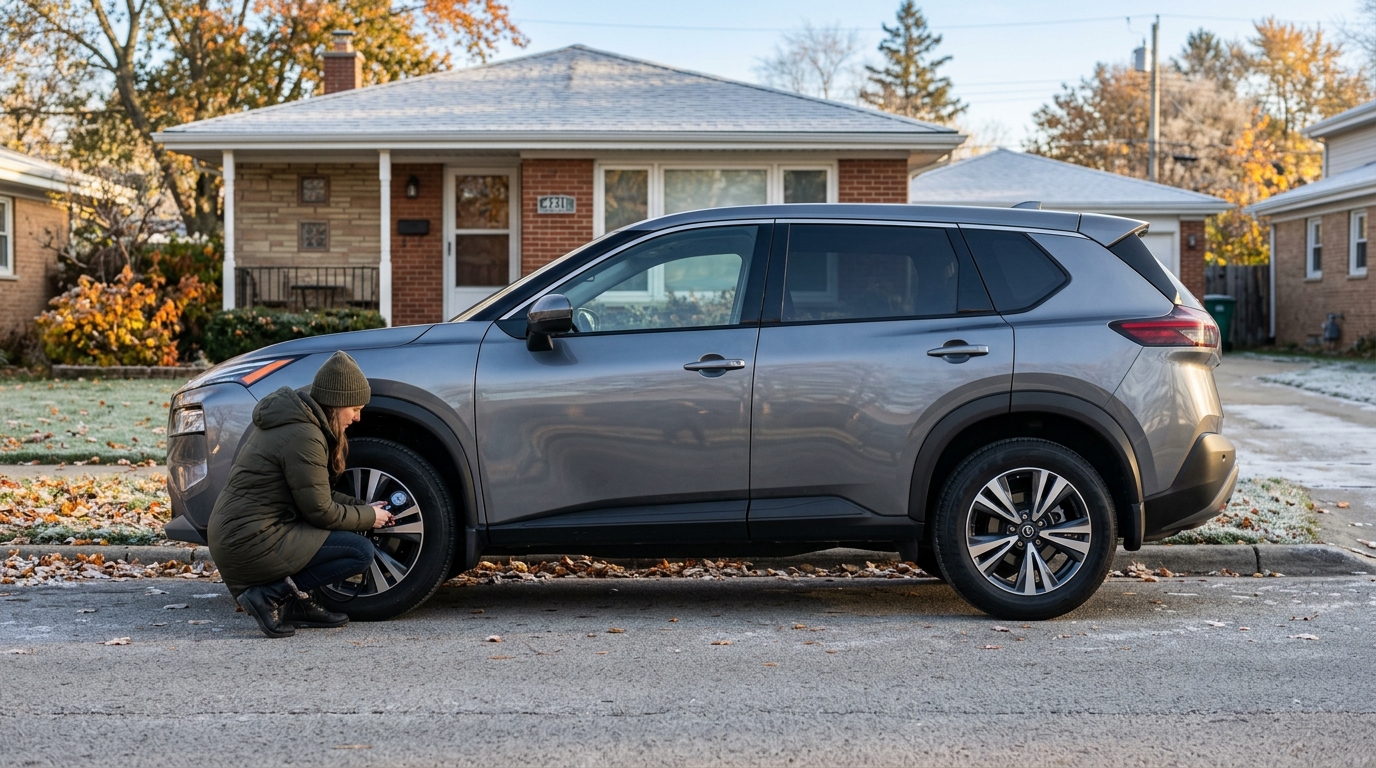
Seasonal maintenance for a Nissan requires synthetic engine oil and filter changes every 5,000 to 7,500 miles, tire rotations to balance tread wear, winter battery cold-cranking amp tests, 50/50 coolant freeze-protection checks, cold tire pressure adjustments for winter freezes, in-cabin microfilter replacements every 15,000 miles, and Xtronic CVT fluid drain-and-fill services every 30,000 to 40,000 miles under severe suburban driving conditions.
Suburban driving patterns along Touhy Avenue present distinct stresses for passenger vehicles throughout the year. Sub-zero winter temperatures, heavy road salt applications, and frequent stop-and-go commuting alter how lubricants and hydraulic fluids degrade. Categorized under severe driving schedules, local vehicles benefit from shortened inspection windows to prevent premature component wear caused by thermal stress and road debris.
Preparing your vehicle before extreme weather arrives supports both mechanical performance and helps maintain warranty eligibility. At Star Nissan, our certified service team conducts comprehensive multi-point inspections during every routine visit. You can easily find our Touhy Avenue service facility or speak directly with an advisor by giving us a quick call at (224) 537-0287 to review your model's specific care plan.
Table of Contents
- What basic Nissan maintenance schedule should you follow before adding seasonal care?
- What seasonal winter maintenance and tire pressure adjustments does a Nissan Rogue need?
- How often should you service your Nissan CVT and what driving habits protect it in local traffic?
- Why are tire rotations, brake checks, and seasonal AC inspections critical for Nissan owners?
- When should you schedule seasonal service and how can you combine recalls or diagnostics?
- Frequently Asked Questions About Nissan Seasonal Maintenance
- Schedule Your Seasonal Nissan Service in Niles Today
What basic Nissan maintenance schedule should you follow before adding seasonal care?
The foundational Nissan maintenance schedule follows 5,000-to-7,500-mile minor service intervals for synthetic oil changes and tire rotations, paired with major service milestones at 30,000, 60,000, 90,000, and 120,000 miles. Establishing this routine creates a baseline of mechanical health before layering on seasonal winterization or summer heating inspections.
Each major mileage interval introduces specialized care tailored to aging drivetrain, filtration, and ignition components:
- 30,000-Mile Milestone: Serves as the first major inspection point. Technicians replace the engine air filter and in-cabin microfilter, complete an engine oil and filter renewal, perform a tire rotation, and execute a DOT 3 brake fluid flush to remove moisture absorbed from humid ambient air.
- 60,000-Mile Milestone: Focuses heavily on drivetrain protection. This milestone incorporates a complete inspection and fresh fluid service for the Xtronic CVT, alongside repeated air filter, cabin microfilter, and brake fluid exchanges.
- 90,000-Mile Milestone: Centers on engine ignition health. Long-life iridium spark plugs are replaced to prevent cylinder misfires, rough idling, and reduced acceleration. Serpentine drive belts undergo thorough inspections for cracking or tension loss.
- 120,000-Mile Milestone: Delivers a comprehensive high-mileage cooling system overhaul. Technicians perform an engine coolant flush to replenish anti-corrosion additives. For all-wheel-drive models like the 2026 Nissan Pathfinder featuring its 3.5L V6 engine and 6,000 lbs towing capacity, transfer case and rear differential fluids are also replaced.
Drivers who complete frequent short trips under 10 miles or experience extended idling in heavy traffic fall into the severe service category. For these vehicles, shortening fluid inspection windows keeps protective additives active and prevents carbon buildup inside the engine crankcase.
What seasonal winter maintenance and tire pressure adjustments does a Nissan Rogue need?
Winter maintenance for a 2026 Nissan Rogue requires adjusting cold tire inflation pressure to match sub-freezing drops, testing 12-volt battery cold-cranking capacity, inspecting the 1.5L VC-Turbo engine's synthetic oil level, topping off winter-grade washer fluid, and verifying all-wheel-drive system engagement. Cold ambient air reduces tire pressure at a rate of roughly 1 PSI for every 10-degree temperature drop, making weekly pressure checks essential during Midwest freezes.
Maintaining proper tire pressure ensures proper contact patch width on icy roads. The 2026 Nissan Rogue calls for a cold tire pressure setting between 33 to 35 PSI. Falling below this threshold causes uneven shoulder wear and reduces fuel economy, while over-inflating reduces traction on hard-packed snow. Pairing correct tire pressure with dedicated winter tires improves stopping distances and steering response, complementing the vehicle's intelligent all-wheel-drive system.
Sub-zero winter temperatures significantly impact electrical performance. Freezing weather reduces a 12-volt battery's chemical reaction speed, cutting available cranking power by up to 50 percent just as the engine requires more torque to turn over cold oil. When local owners bring in a Rogue before winter, our service team tests the cold-cranking amps on the 12-volt battery to ensure reliable starts on freezing mornings.
Commuters navigating stop-and-go traffic along Oakton Street in Skokie during icy months also depend heavily on clear visibility. Swapping worn wiper blades for winter-rated blades and filling the reservoir with anti-freeze washer fluid prevents windshield icing during sudden lake-effect snowfall.
How often should you service your Nissan CVT and what driving habits protect it in local traffic?
Nissan continuously variable transmissions operating under severe suburban driving conditions require fluid drain-and-fill services every 30,000 to 40,000 miles using genuine NS-3 CVT fluid. Under standard highway driving parameters, initial inspections begin at 60,000 miles, but frequent stop-and-go commuting, extended idling, and cold weather accelerate thermal fluid degradation.
Unlike traditional automatic gearboxes that rely on fixed planetary gear teeth, an Xtronic CVT utilizes hydraulic pressure to clamp a high-tensile steel belt between two variable-diameter pulleys. Lubricating this interface demands precise friction characteristics provided exclusively by NS-3 CVT fluid. Over time, heat cycles break down these friction-modifying additives. Factory guidelines specify a traditional fluid drain-and-fill rather than a high-pressure machine flush, preserving delicate internal valve body seals and removing suspended metallic debris captured by internal oil pan magnets.
Adopting smooth driving habits plays a major role in extending transmission longevity:
- Gentle Throttle Input: Applying gradual accelerator pressure from a complete stop allows hydraulic clamping pressure to build fully across the pulley faces before peak engine torque is applied.
- Complete Stops Before Gear Shifts: Coming to a complete halt before shifting between Reverse and Drive prevents directional shock loads to the internal steel belt.
- Cold-Weather Idle Warm-Up: Allowing the engine to idle for roughly one minute during sub-zero mornings gives heavy, cold fluid time to circulate through the hydraulic control valve body.
Observing these operational habits keeps internal hydraulic operating pressure stable, ensuring smooth ratio adjustments across sedan models like the Nissan Altima powered by its 2.5L engine and crossover lineups like the Nissan Murano with its 2.0L engine.
Why are tire rotations, brake checks, and seasonal AC inspections critical for Nissan owners?
Routine tire rotations every 5,000 to 7,500 miles, annual brake inspections, and seasonal air conditioning system checks preserve mechanical safety, maintain stopping responsiveness, and protect cabin air quality throughout changing seasons. Front-wheel-drive and all-wheel-drive configurations place uneven mechanical loads on front tires, causing front tread to wear up to twice as fast as rear tread if left unrotated.
Regular tire rotations redistribute tread wear evenly across all four tires, helping original-equipment tires achieve their expected 40,000 to 60,000-mile lifespan. During each rotation, technicians inspect tread depth, check for abnormal cupping caused by misaligned suspension linkages, and verify wheel balance.
Brake maintenance is equally vital for commuter safety. Hydraulic brake fluid is naturally hygroscopic, continuously absorbing moisture from ambient air. Accumulated water lowers the boiling point of the fluid, leading to a spongy pedal feel under heavy braking and accelerating internal corrosion within calipers and master cylinders. Replacing brake fluid every 30,000 miles or two years ensures firm hydraulic pressure, while replacing worn brake pads before friction material drops below 3 mm protects brake rotors from costly scoring.
Seasonal HVAC care ensures year-round driver comfort and visibility:
- Cabin Microfilter Replacement: Swapping the in-cabin microfilter every 15,000 miles removes airborne pollen, road dust, and seasonal allergens, keeping airflow moving freely through heating and cooling ducts.
- Refrigerant and Compressor Inspection: Checking AC refrigerant pressures in late spring ensures efficient cooling during high summer heat.
- Defroster Performance: Verifying blower motor output and cabin filter cleanliness before autumn guarantees quick glass defogging during cold, damp morning commutes.
Utilizing our express service option allows vehicle owners to combine tire rotations, oil changes, and multi-point system checks into one convenient visit.
When should you schedule seasonal service and how can you combine recalls or diagnostics?
Scheduling seasonal maintenance one to two weeks before peak weather transitions—typically in late August for winter prep and early April for spring service—guarantees optimal appointment availability and avoids long service waits. Midweek morning slots generally offer the quietest service bay schedules for routine care.
Combining routine seasonal care with open factory recall checks or check-engine light diagnostics streamlines vehicle maintenance into a single visit. When you schedule an appointment, our service department automatically scans factory databases using your vehicle's 17-digit VIN to identify active service campaigns, control module software updates, or safety recalls. Any eligible recall work is performed using genuine OEM parts at no charge to you.
Addressing amber check-engine lights promptly prevents minor sensor irregularities from escalating into larger mechanical issues. An amber Malfunction Indicator Light signals that the onboard engine control unit has detected an anomaly in fuel metering, emissions controls, or ignition timing. Resolving diagnostic codes alongside scheduled oil service or tire rotations ensures your vehicle operates at maximum efficiency.
For personalized assistance or to coordinate upcoming maintenance, you can stop by our service center location or contact our team directly at (224) 537-0287.
Frequently Asked Questions About Nissan Seasonal Maintenance
Q: What happens if I delay my Nissan's 30,000-mile major service milestone?
Delaying a 30,000-mile service allows dirty engine and cabin air filters to restrict airflow, reduces engine fuel efficiency, and permits moisture-laden brake fluid to corrode internal hydraulic brake lines. Postponing required maintenance can also complicate future warranty claims if a component fails due to lack of documented care. Completing catching-up service promptly restores system protection.
Q: How does severe winter cold affect electric driving range in plug-in hybrid models?
Sub-freezing ambient temperatures temporarily reduce electric driving range by roughly 15% to 30% due to slower lithium-ion battery chemistry and increased electrical demand from cabin heaters. Utilizing garage storage, preconditioning the cabin climate while plugged into grid power, and maintaining correct cold tire pressure helps mitigate winter range loss.
Q: Can I take my Nissan to an independent shop without voiding my factory warranty?
Routine maintenance performed at independent shops does not invalidate your factory warranty under federal law, provided correct fluid specifications and quality parts are installed. However, you must retain itemized service receipts showing exact dates, mileage, VIN, and part numbers. Servicing at an authorized dealership automatically logs all records into Nissan's national database, eliminating paperwork hassles during warranty repairs.
Q: What is included in a complimentary factory multi-point inspection?
A factory multi-point inspection evaluates critical mechanical and safety components using a clear color-coded rating system. Technicians measure brake pad thickness, inspect rotor condition, check tire tread depth and inflation pressure, conduct a digital battery test, check suspension linkages, inspect drive shaft boots, and verify all under-hood fluid levels.
Q: Why is genuine NS-3 fluid mandatory for Nissan CVT fluid services?
Universal transmission fluids lack the precise anti-shudder friction modifiers required for steel belt traction against smooth hydraulic pulleys. Using unapproved fluids can cause internal belt slippage, erratic shifting, severe pulley wear, and potential denial of powertrain warranty coverage if transmission failure occurs.
Schedule Your Seasonal Nissan Service in Niles Today
Staying ahead of seasonal maintenance is the single most effective way to preserve vehicle safety, protect engine efficiency, and maintain high resale value. Whether you drive a Nissan Rogue, Altima, Pathfinder, or Murano, keeping up with mileage milestones ensures your vehicle handles Midwest weather shifts with complete confidence.
Our factory-certified technicians at Star Nissan use advanced diagnostic equipment and genuine OEM parts to complete every service accurately. Reserve your upcoming appointment online or give our service advisors a call at (224) 537-0287 to set up your seasonal care plan today.
© 2026 Star Nissan. All rights reserved.